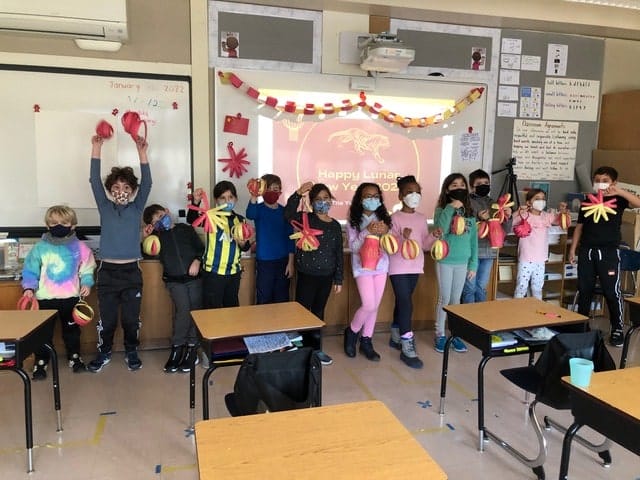
On Monday 1/31, Fieldston Lower Class 2B recognized and celebrated the Lunar New Year by learning about the meaning and traditions behind the holiday. Before my onboarding to Fieldston Lower in August 2020, I lived in Shanghai, China for three years, therefore this holiday has a lot of special meaning within my own life that I wanted to share with my students.
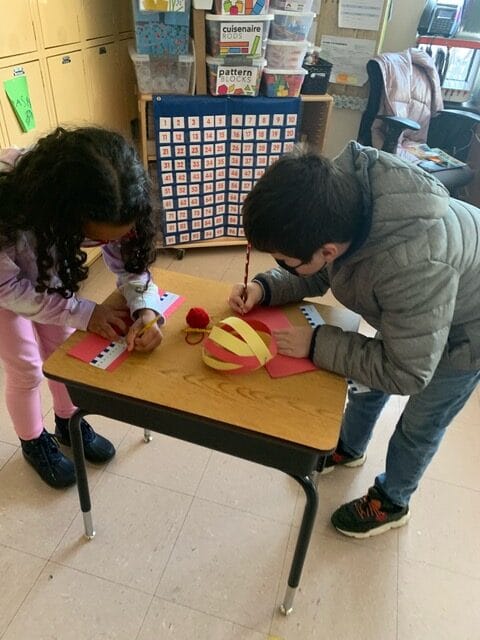
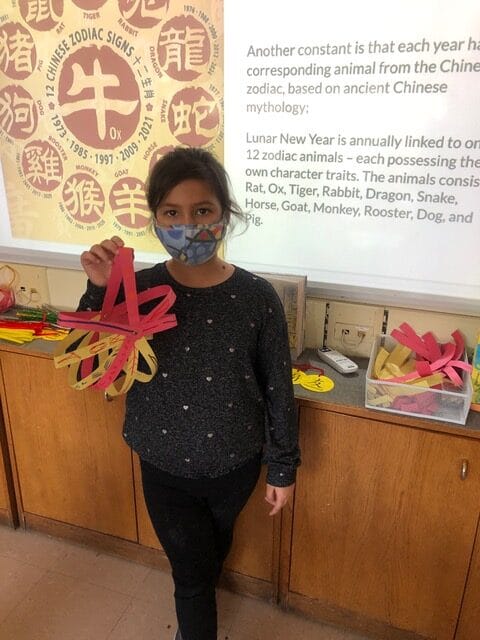
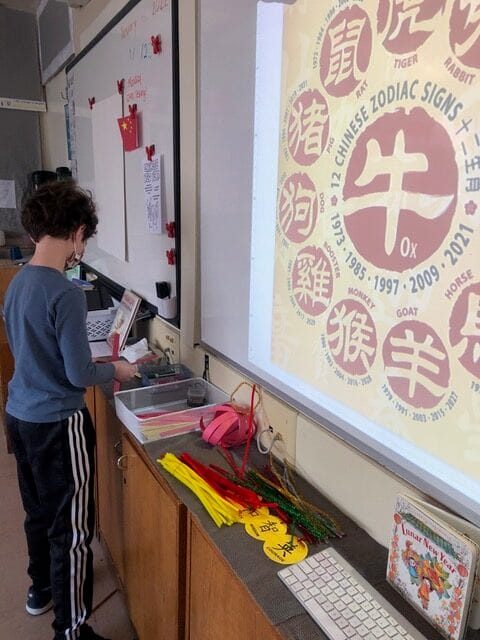
In class, we learned about the importance of the lunar calendar and students looked up their zodiac animal — the majority of students were born in 2014 making them horse, while some were born in 2013 making them snake. We also learned about traditional foods eaten during the holiday, such as dumplings, and we heard the symbolic old tale of the dragon. I showed the students current photos of Shanghai, China. The photos featured store displays of clothing with the current zodiac animal that are popularized during this time, as well as special Lunar New Year structures that are erected in the middle of malls to display for the two-week holiday. These structures are sometimes entertainment areas for children, similar to play areas we have here in the U.S. As part of a well-known tradition, we made lanterns that are used as decorations for homes and buildings, including on the important 15th last day of Lunar New Year, which is the Lantern Festival. I gifted each of my students with an actual coin from Chinese currency. Typically, it is customary to give what is known as “hongbao” (red envelopes with money inside). Finally, I taught the class how to say “Happy New Year” in Chinese/Mandarin.
My travels around the world have taught me it is easy to understand and value people if you learn about their traditions and culture — it is a way of learning who they are and I find that we are all more alike than we know or think. This is a goal that I have for my students, and so I try to expose them to as many of these experiences as I can. Sometimes, I am fortunate to teach them because of my experiences and sometimes we all learn together.
By MinYoung Song
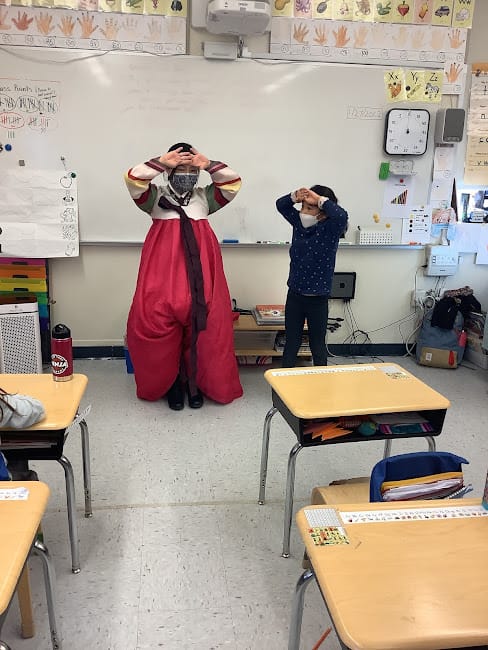
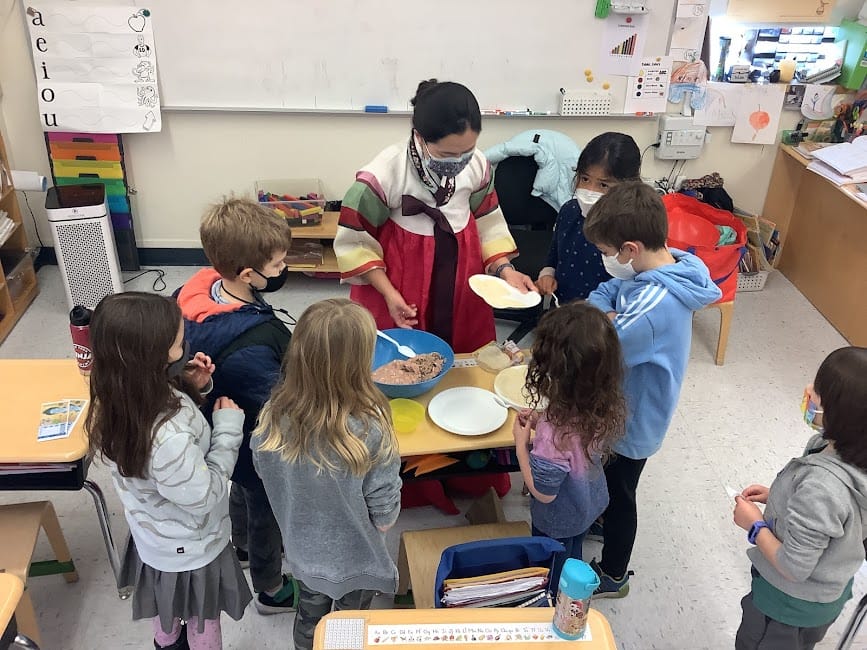
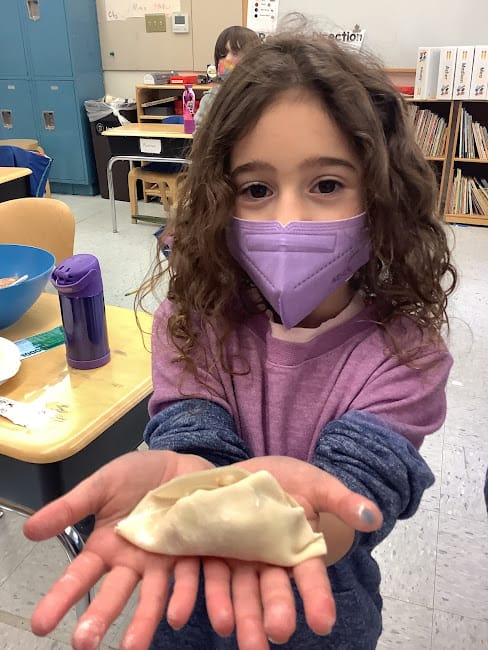
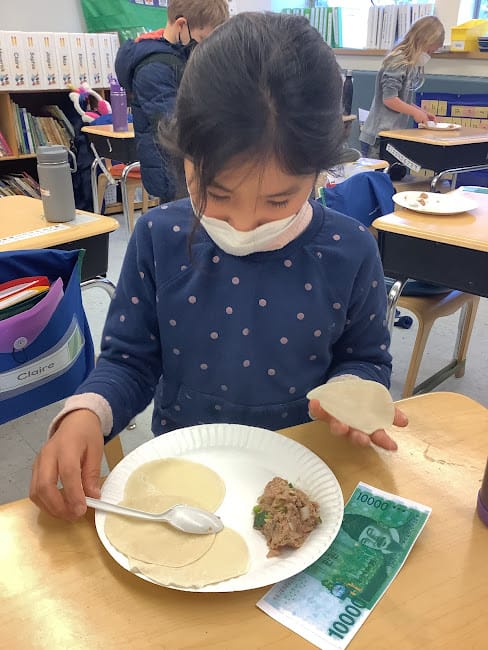
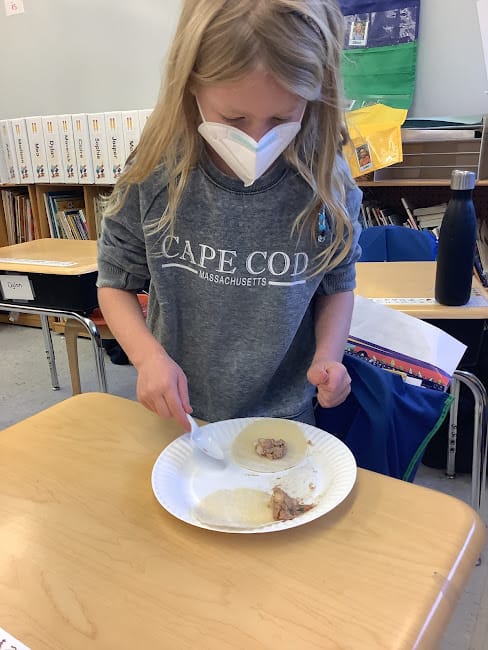
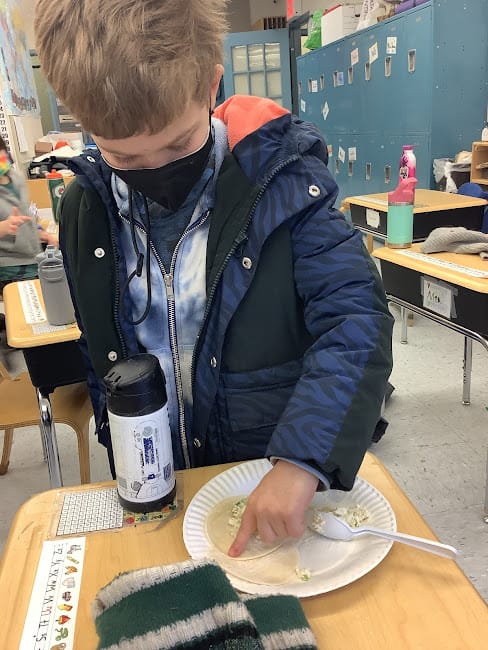
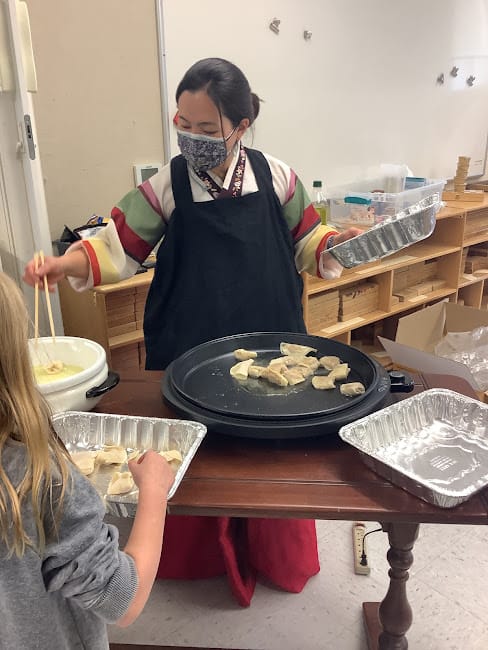
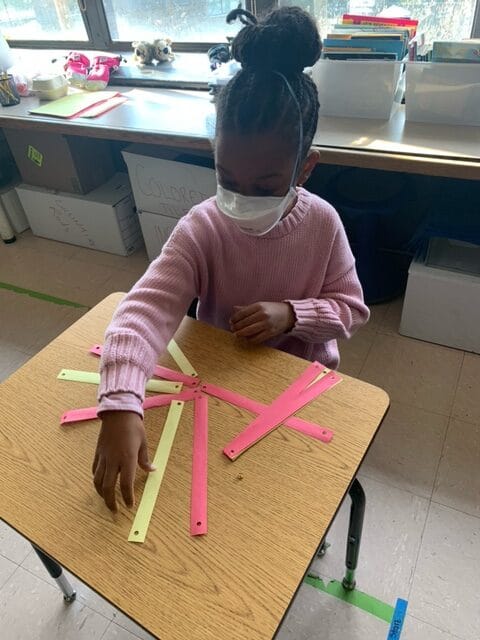
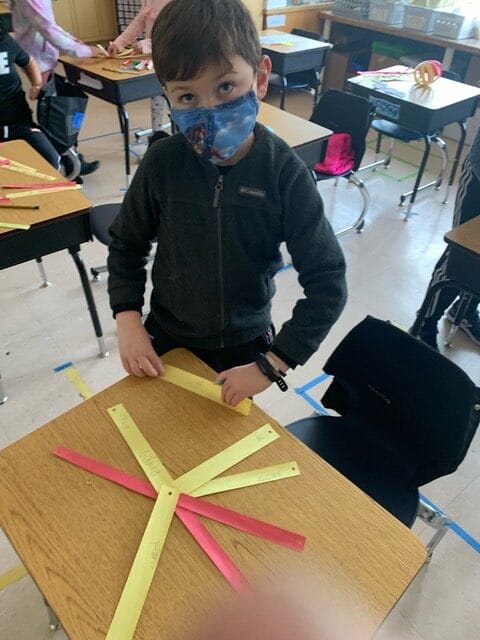
In celebration of Lunar New Year, 1st Grade students learned how the holiday is celebrated in Korea. I wore the traditional Korean clothing, hanbok, to celebrate with my class and other 1st Grade classes. Students learned about the tradition of bowing to their elders and how there is a specific way to bow and to receive money from your elders. Afterwards, the students bowed to receive a few words of wisdom and received some (fake) Korean money! The students even practiced saying “no, no, no” when the money was given and awaited adult approval before receiving the money. Some classes had the chance to make dumplings and eat them.
Having grown up in Korea informs how I shared the holiday with my students. Lunar New Year is one of the biggest holidays celebrated in Korea. It is a time of the year when many families will travel to gather with family. On Lunar New Year day, families will get together to eat their first meal together. The first meal is usually a rice cake soup called “Dduck Guk.” When I was growing up, we were told that we would get a year older for every Dduck Guk we finished. So many children would try to eat two or even three bowls of it!
Afterwards, families will gather together for “saebae” — a tradition of bowing to your elders and receiving blessings and money in exchange. This is when many of the children will wear their hanbok, which is traditional Korean clothing. After bowing, the older adults will always offer the children some money. It is typical for a child to refuse the money when it is first offered by the adult. The adult will always insist on the children receiving the money and the children are intended to glance over at their parents to get their final approval. Afterwards, the children are allowed to receive the money as the adults will share words of encouragement and blessings for the upcoming new year. Growing up, Lunar New Year was always my favorite holiday as it was a time I would be spending with many of my cousins, aunts, and uncles. It was a time to eat lots of amazing food but most importantly, you could also make some money!