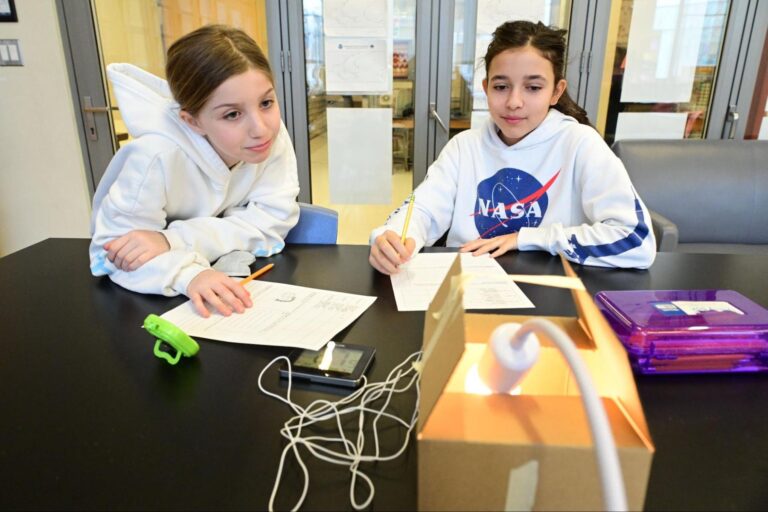
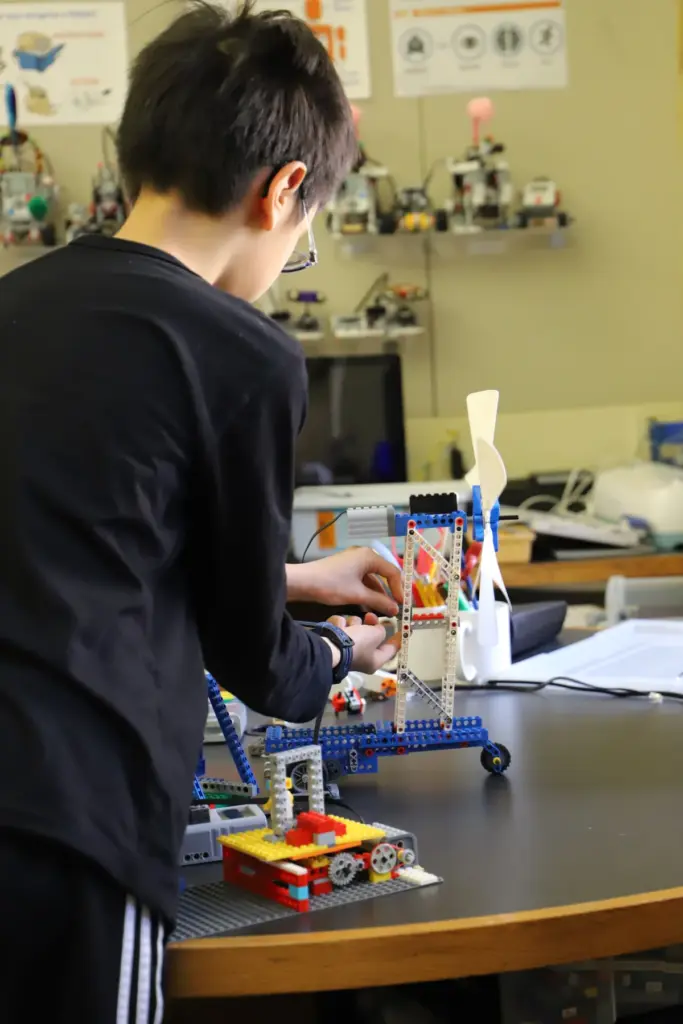
The Lego robot sitting beside Charlotte D. ’27 and Dylan M. ’27 suddenly whirs into action.
“We made solar panels that will rotate when the sun moves.” Charlotte gestures toward a series of reflective surfaces that respond to light emitted from an electric bulb. “We programmed it to move six seconds to simulate six hours of the sun moving across the sky.”
Dylan continues: “When the light shines on the solar panel, the wire right here transfers the energy into here” — he points to a capacitor — “and you see how much energy you get from it. This unit stores the energy from the sun. If you turn this dial, the energy stored can be used.”
Charlotte and Dylan’s solar generator may not produce quite enough energy to power ECFS just yet — but for the School’s youngest climate change innovators, this is just the start.
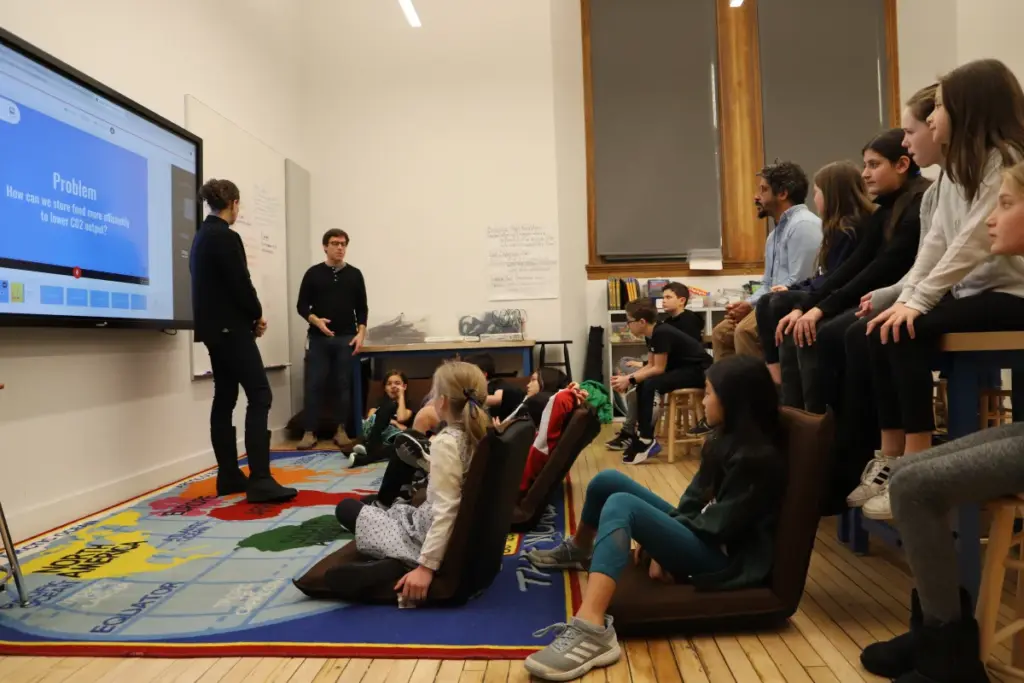
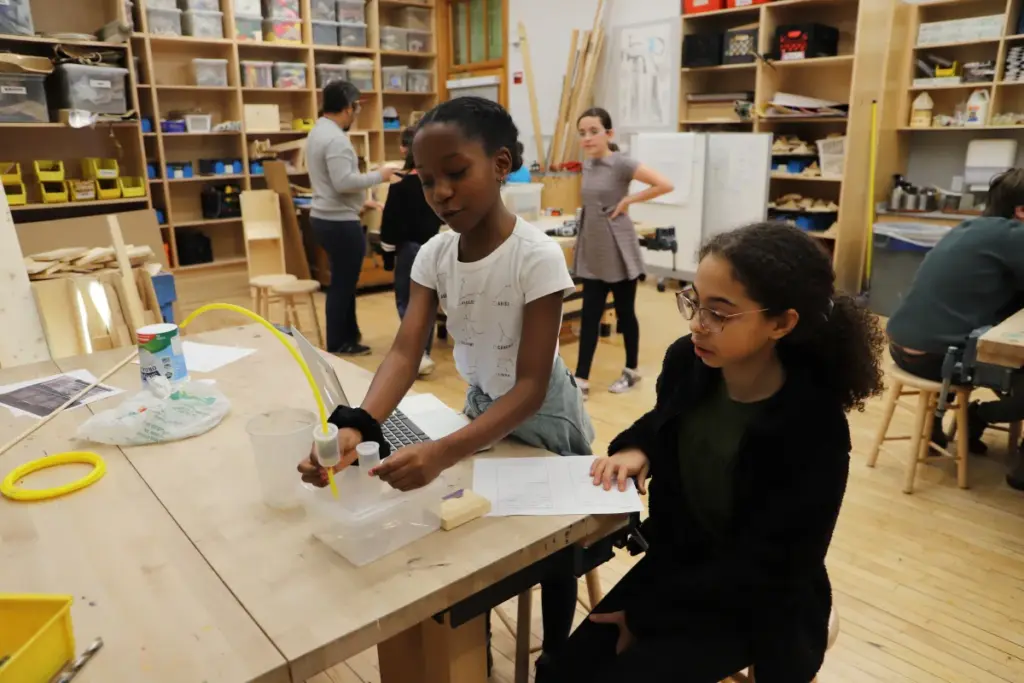
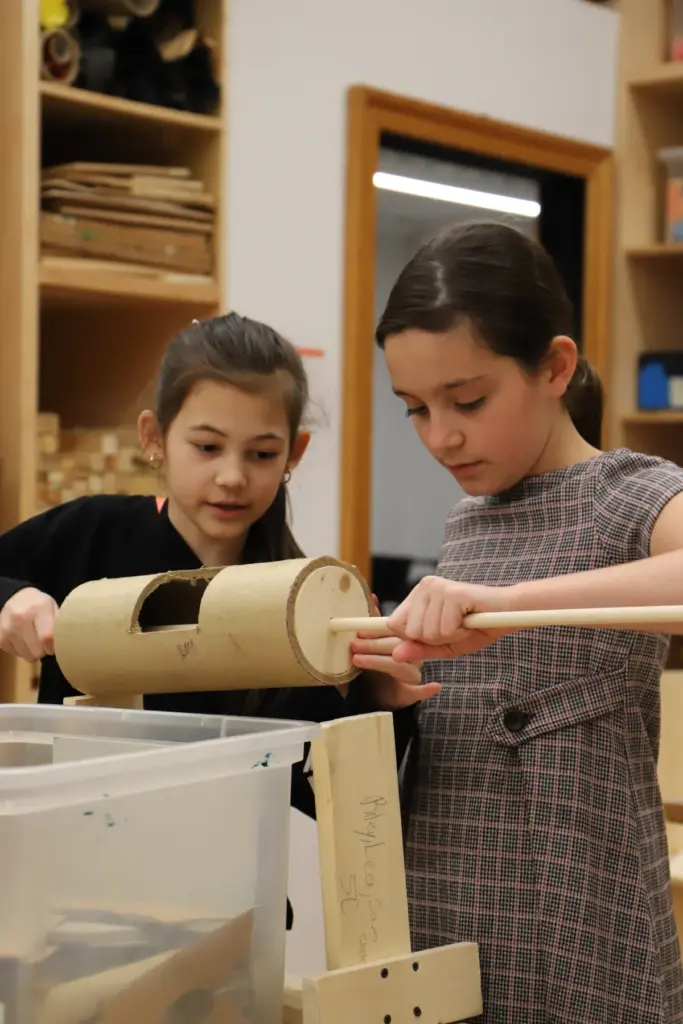
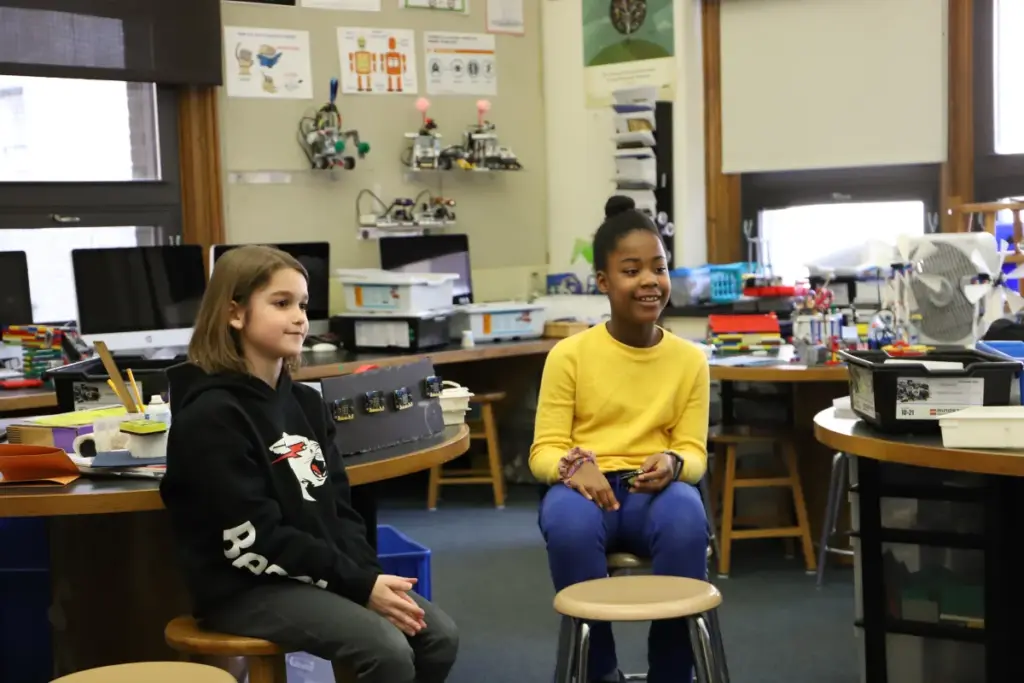
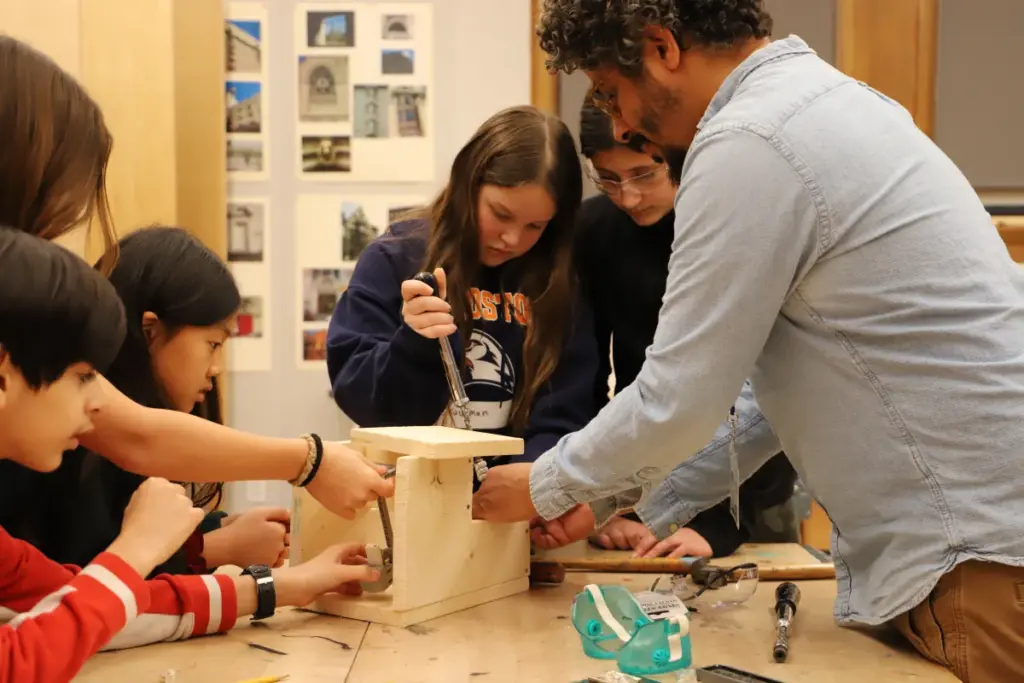
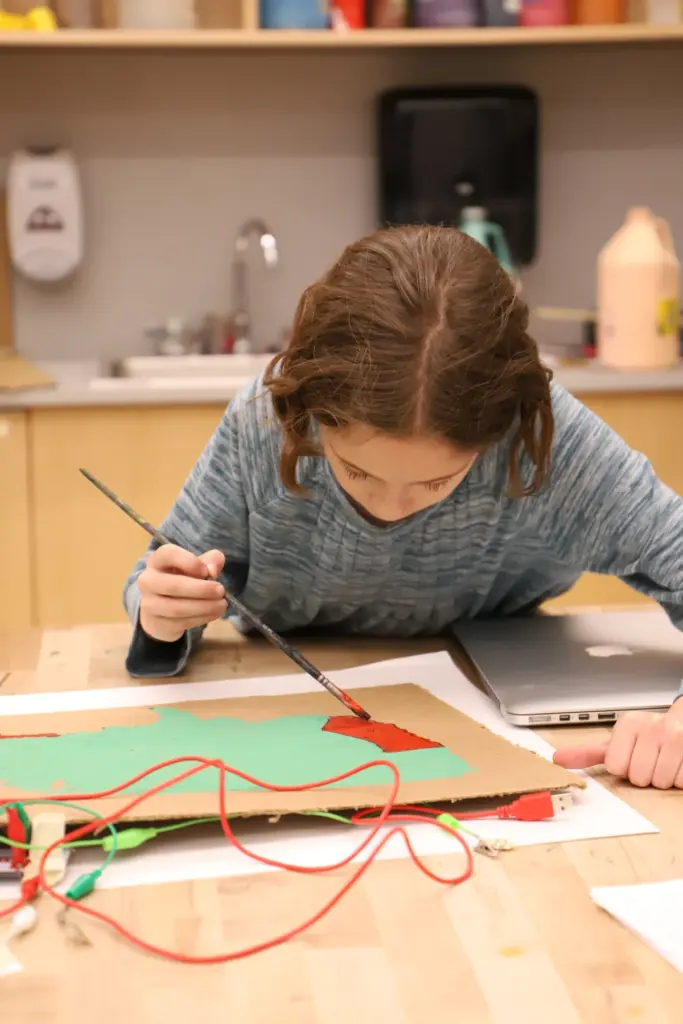
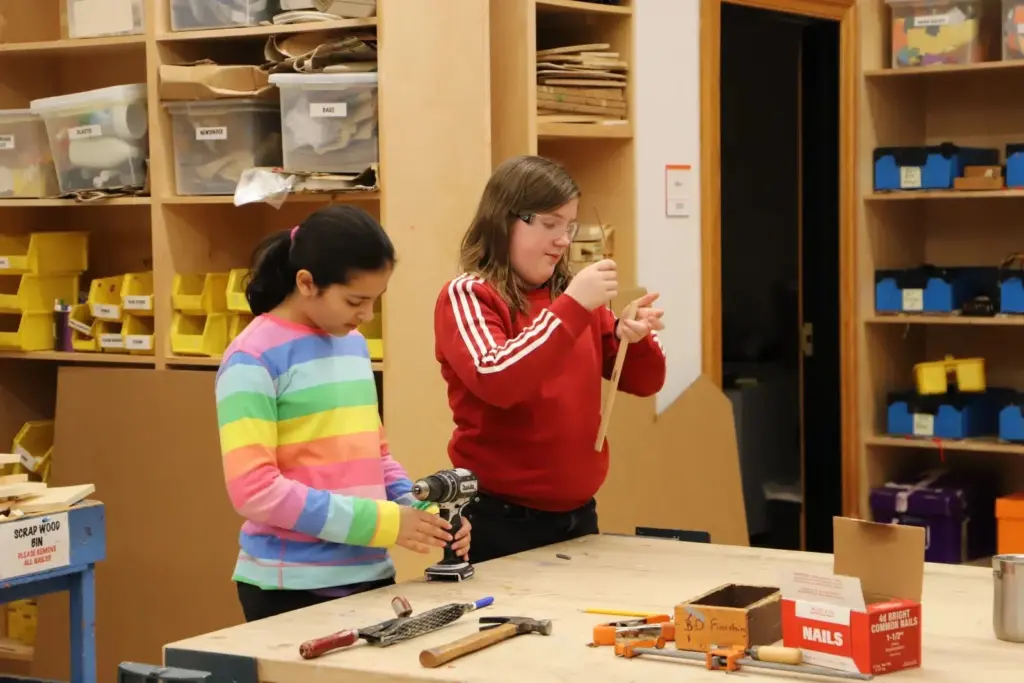
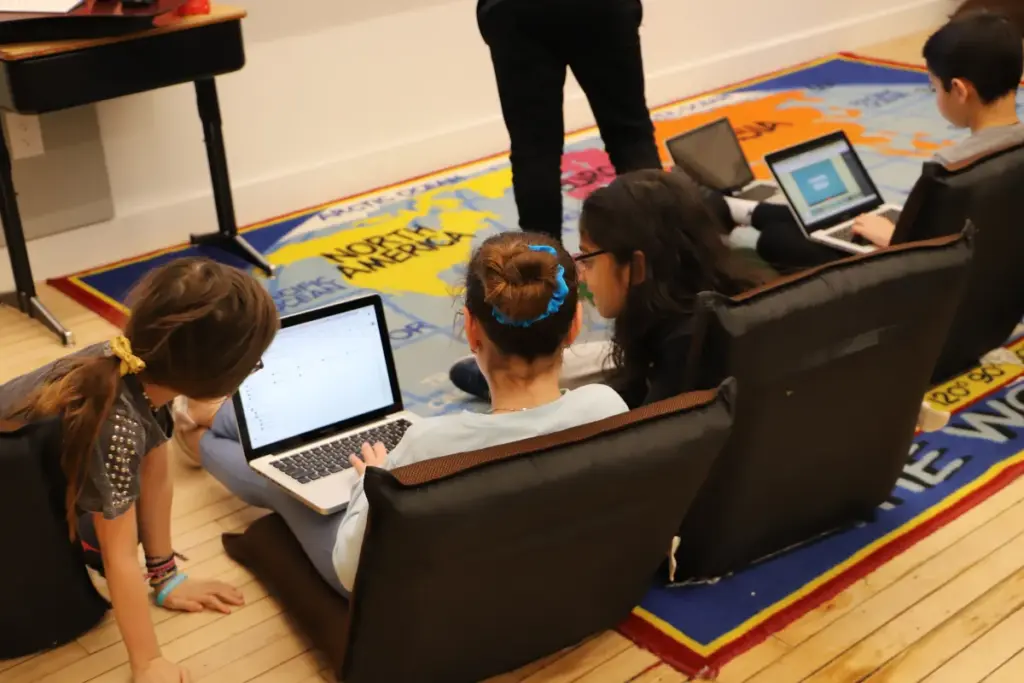
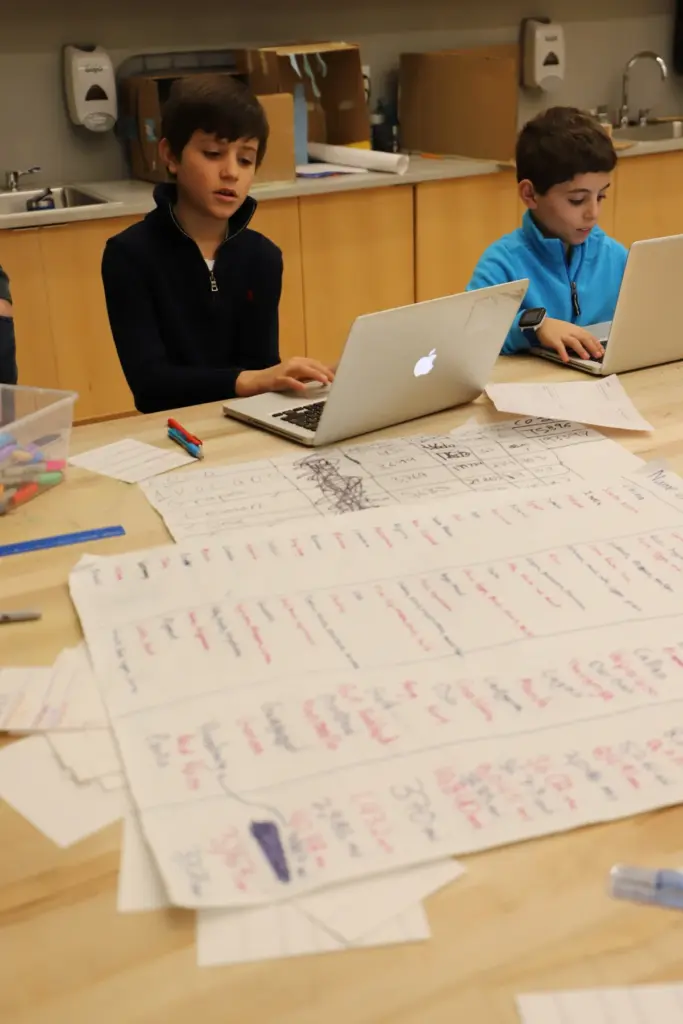
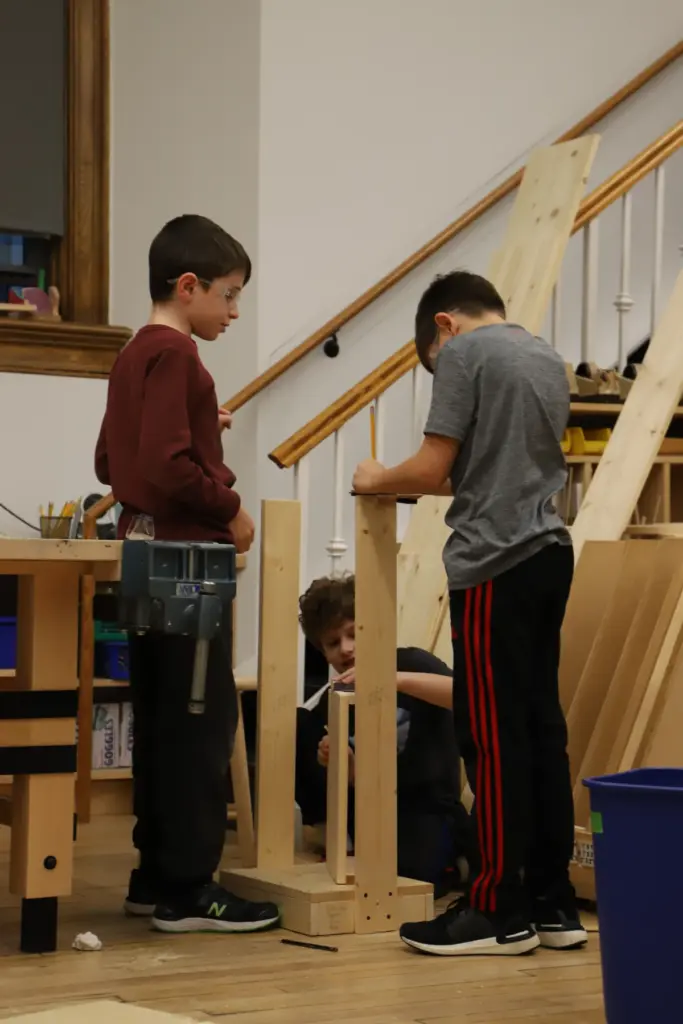
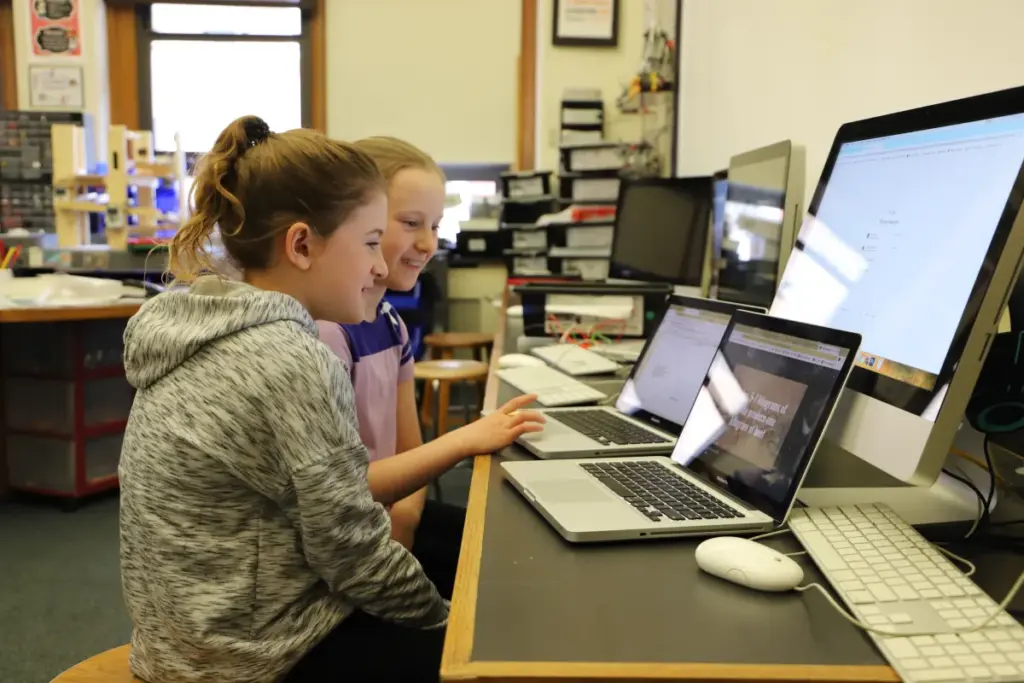
Each year, 5th Graders at Ethical Culture choose one of the United Nations’ Sustainable Development Goals to tackle at school. This year, the 5th Grade settled on climate action, and for the past few months, students have drawn upon the skills and knowledge they’ve accrued in their computer, shop, and science classes to devise solutions to the global environmental crisis.
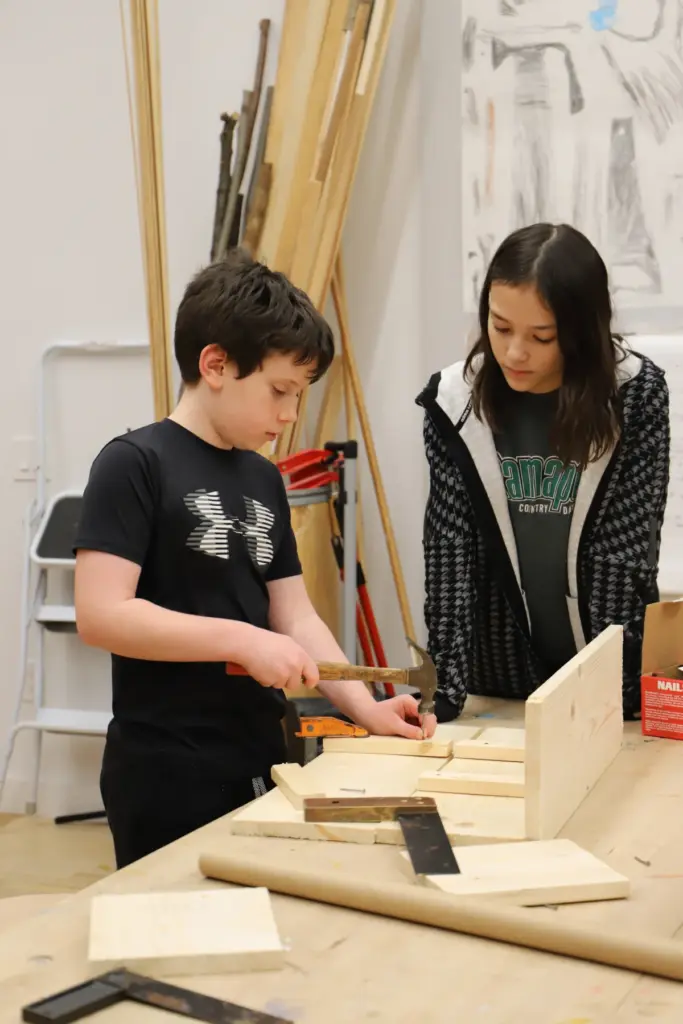
The curriculum is as immersive as it is interdisciplinary. Students break up into 90-minute working sessions — led by Jen Erdman, Science Teacher; Lan Heng, Computer Education Teacher; Jay McKay, Technology Specialist; and Leonard White, Social Studies Workshop Teacher — in which they handsaw, code, and tinker their way through the problem at hand. As Erdman explains, an important aim of the curriculum is to bring global issues down to the local scale of the School. Students are tasked with building models and developing systems that could theoretically be implemented at Ethical Culture.
Within the umbrella topic of climate action, one 5th Grade class is working on the issues of food and transportation. In Social Studies Workshop, Sarah J. ’27 and Dominique M. ’27 are huddled over an invention that will revolutionize the act of composting. Their contraption — an assemblage of plastic containers, film canisters, tubes, and steel wool — models a purification system for methane that converts the gas into usable energy. “We’re just making a prototype right now,” explains Dominique, “but it could work in the future.” Elsewhere in the workshop, Riley M. ’27 and Lea C. ’27 are piecing together a wooden compost tumbler that can be manually rotated to allow air to circulate through the compost and facilitate decomposition.
Meanwhile, two classrooms over, Rose P. ’27 has made an interactive map of the United States. Pressing buttons on the map triggers a slideshow that indicates the volume of carbon emissions generated from shipping oranges from California, or grapefruit from Florida, to New York. As Cooper S. ’27 explains, not only does sourcing produce from out-of-state generate carbon emissions, but it also requires fruit to be harvested while underripe and artificially ripened after shipping.
We’re just making a prototype right now, but it could work in the future.
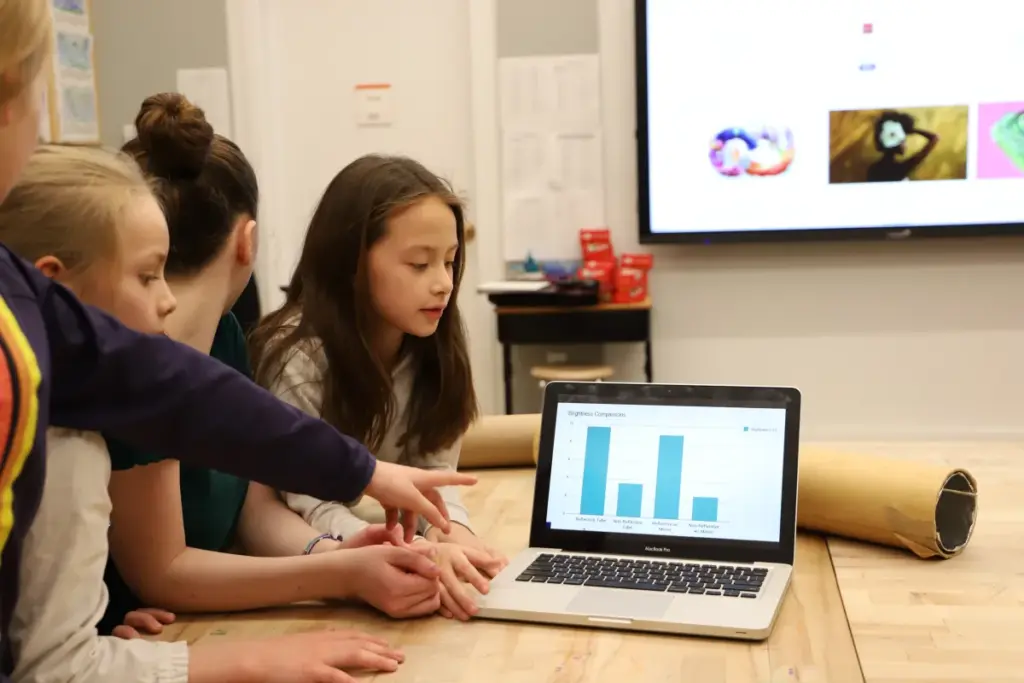
The students’ work will be captured in videos and slideshows that the 5th Grade will present to all of Ethical Culture in their Earth Day assembly. Max P. ’27 holds up an iPad to record as his classmates Evan M. ’27 and Clarke G. ’27 shout: “We are the food and transportation group, and this is our project!”
One of the most compelling facets of the 5th Grade project is that it allows each student to choose not only a topic of interest but also a modality of creation that best suits their learning style. Take the issue of combating waste — for students who like the tactility of working with their hands, Social Studies Workshop offers the opportunity to be fully hands-on.
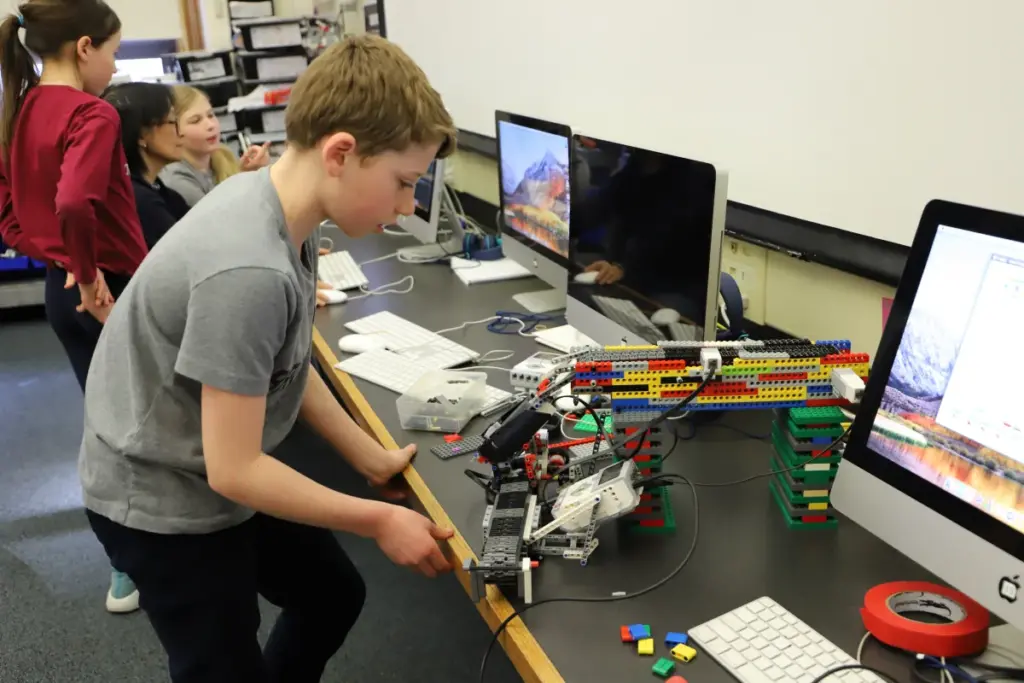
Students who prefer digital innovation have plenty to experiment with as well. In the computer lab, Max G. ’27 is troubleshooting an automatic sorter that could be used to separate trash. Lego pieces move down a miniature conveyor belt, and — as they pass by a sensor — are redirected based on their color. “A lot of the time, trash is misplaced in the sorting,” Max explains. “If you can find a more efficient way, then you can decrease the amount of trash that’s polluting the landfill.” Meanwhile, his classmates Leon H. ’27 and Yaseem S. ’27 are building a robotic claw for picking up trash.
And then there’s room for the entrepreneurial. In Erdman’s classroom, Henry A. ’27 launches into a sales pitch for freeBay, an online platform that aims to reduce landfill waste. Transporting unwanted items to landfills that are hundreds of miles away generates a lot of carbon emissions, Henry explains, articulating the enormity of the distance with his hands. A better solution? Hold the items in a storage space where others can come to claim them for personal use. He points to a scale model he built with the rest of his group, with zones demarcated for large furniture, small furniture, and miscellaneous supplies.
“It’s almost like Amazon, where they have a place to store everything, but instead, people come and pick it up,” Henry explains.
Though the 5th Graders may not see all of their ideas come into fruition, they’ve sparked important dialogue at Ethical Culture about one of the most pressing societal issues. “We told them to think big,” McKay laughs. Considering the breadth of innovations the students have come up with, they’re certainly doing just that.