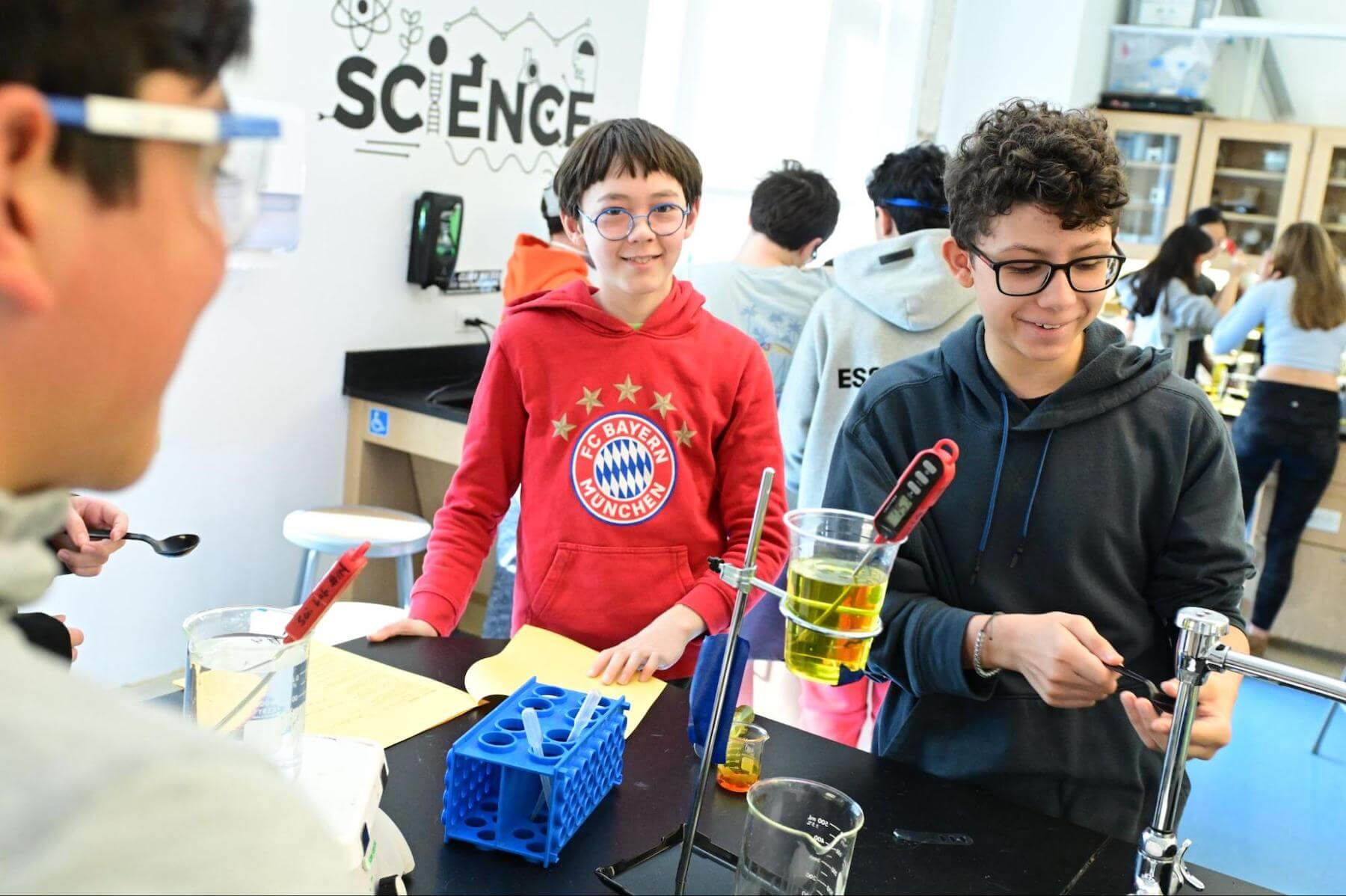
Fieldston Middle faculty work hard to make science classes informative, safe, and a little playful, helping to ignite curiosity and engage students in memorable, hands-on discoveries. 7th Graders recently encountered this firsthand in Science Teacher and Grade Level Coordinator Kelly Sigro’s class, where students studied the process of homeostasis in a lab experiment featuring none other than TV icon Homer Simpson.
“This idea originated from several science teacher blogs I follow online,” says Sigro. “I had never conducted a lab on homeostasis, and I was searching for something that would help students grasp the process of homeostasis as part of their life science unit.”
Homeostasis is a self-regulating process by which a living organism can maintain internal stability while adjusting to changing external conditions. For their “Homer-ostasis” lab, 7th Graders worked with a clear cup with Homer Simpson’s face on the side. Their objective was to maintain a constant temperature within their cup of liquid, keep a fluid level at Homer’s eyebrows, and maintain a constant concentration of sugar, or electrolytes, in a leaky plastic cup for five minutes, thus keeping Homer “alive.”
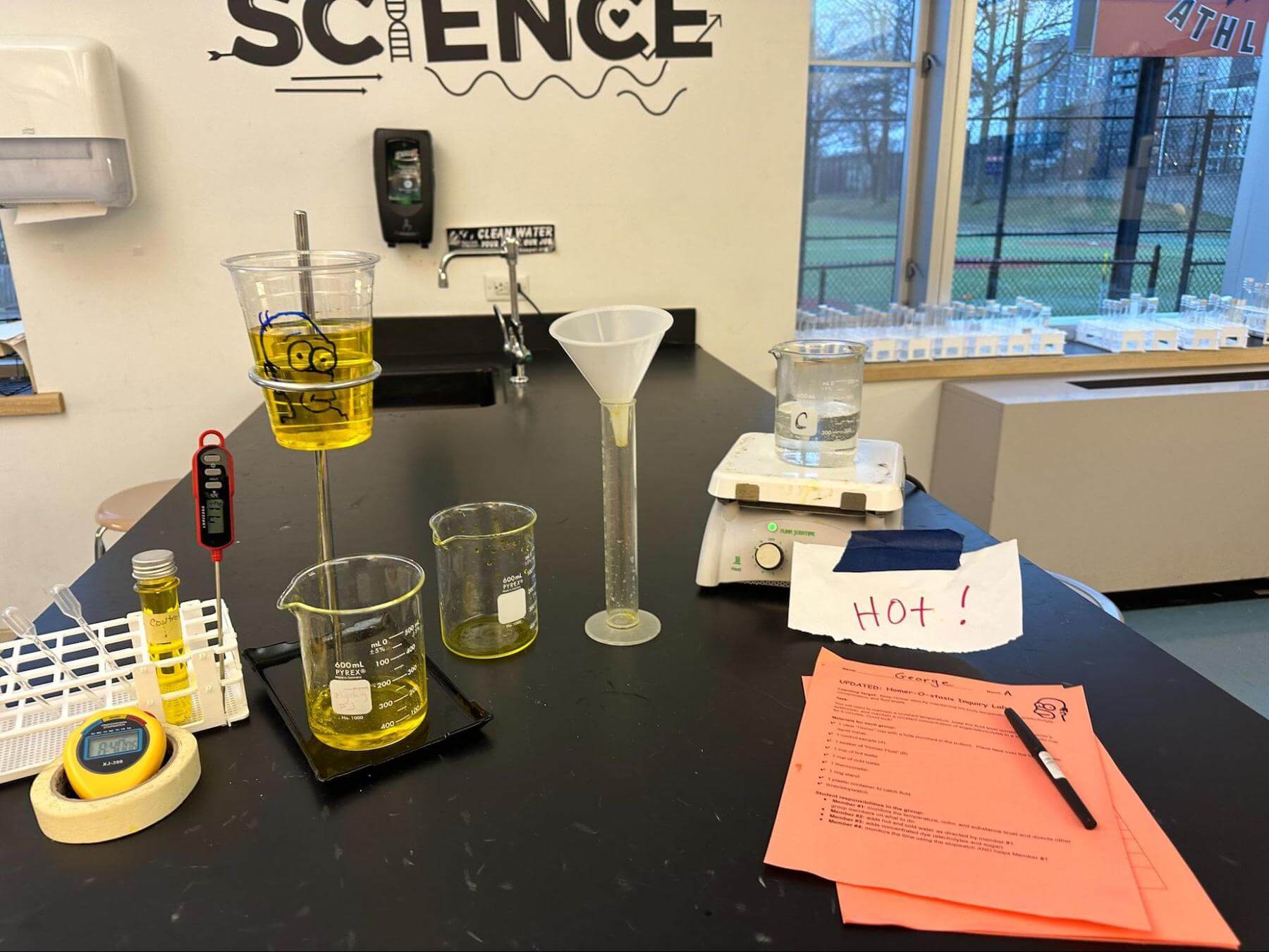
“There was a timed portion of the lab, which added a bit of urgency and excitement,” Sigro adds. “To solve the problem, students had to work collaboratively. The lab also reinforced the use of lab safety and science tools through hot plates, boiling water, a thermometer, and timers. They also learned about dehydration, electrolytes, and temperature.”
In groups of four, each student fulfilled a different task. These included monitoring temperature, color, and substance level, adding hot and cold water per the temperature monitor’s instructions, adding concentrated yellow dye representing electrolytes, and monitoring the experiment’s timing.
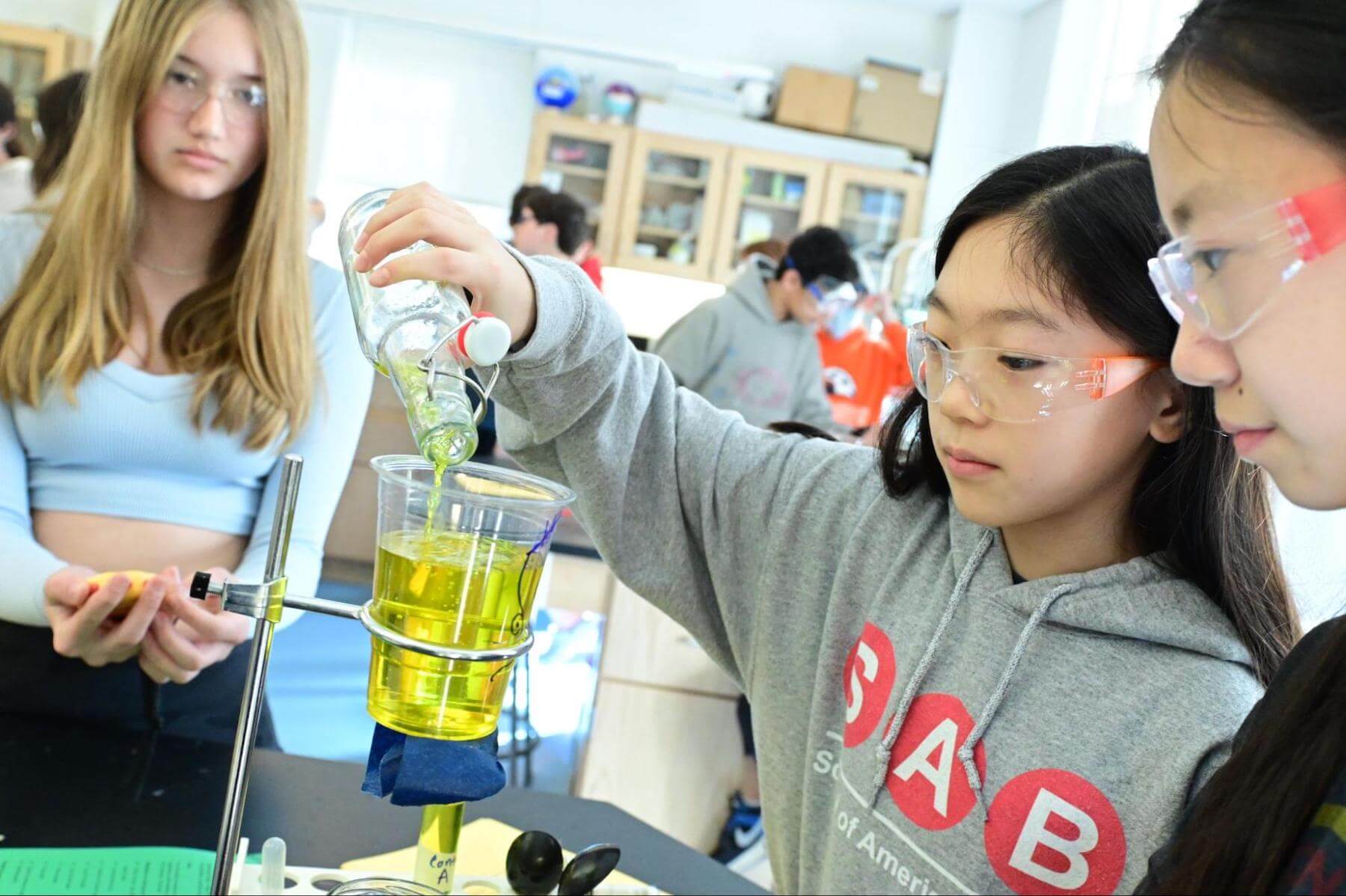
“I believe the most common challenge students encounter when collaborating is the difficulty in determining how they should contribute,” Sigro says. “In middle school, some students struggle with knowing where to start. For labs like this one, I find it beneficial to assign specific roles to each student, which enhances the learning experience for everyone involved. This approach helps them recognize the value of solving a problem together. Toward the end of the year, I frequently allow students to take the lead and work independently.”
In addition to the fun brought about by Homer Simpson and the collaborative nature of the project, the lab’s hands-on approach allowed students to develop a more complex understanding of key scientific concepts.“When I learn something, I can understand what it is to an extent,” says George W. ’29. “After that lab, I can understand homeostasis more deeply after actually experiencing it. Now I know how many things it does, like keeping water and temperature levels good.”
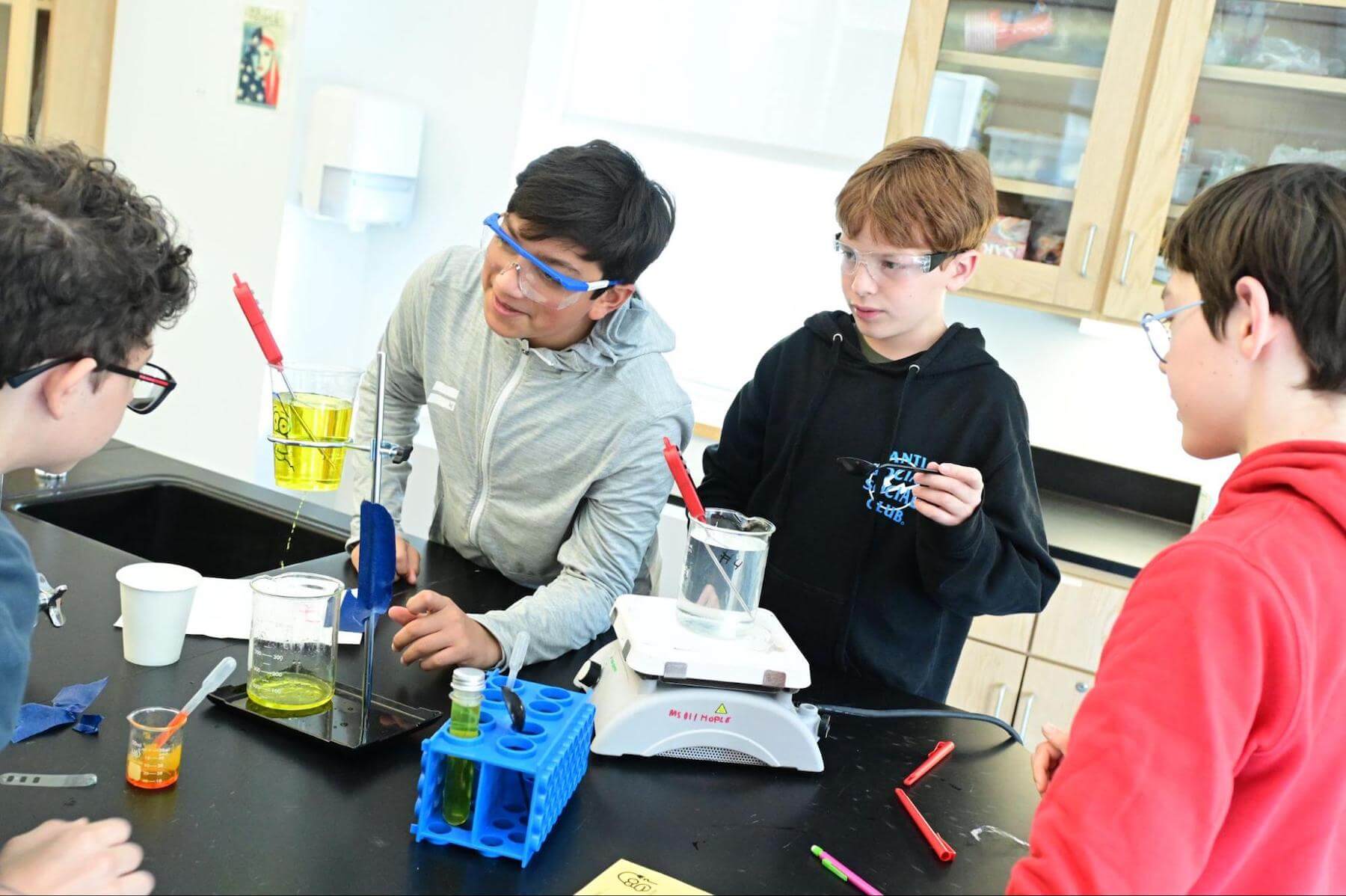
During a busy day of classes and activities, learning through an enjoyable, collaborative activity leaves a lasting impression on Fieldston Middle students.
“Introducing a fun aspect to lab work helps cultivate a love for science,” Sigro says. “Labs like this one not only ignite additional curiosity about the topic but also prompt students to generate new questions and ideas for further experiments and make connections to their own lives. Most importantly, they are actively developing critical thinking and problem-solving skills.”
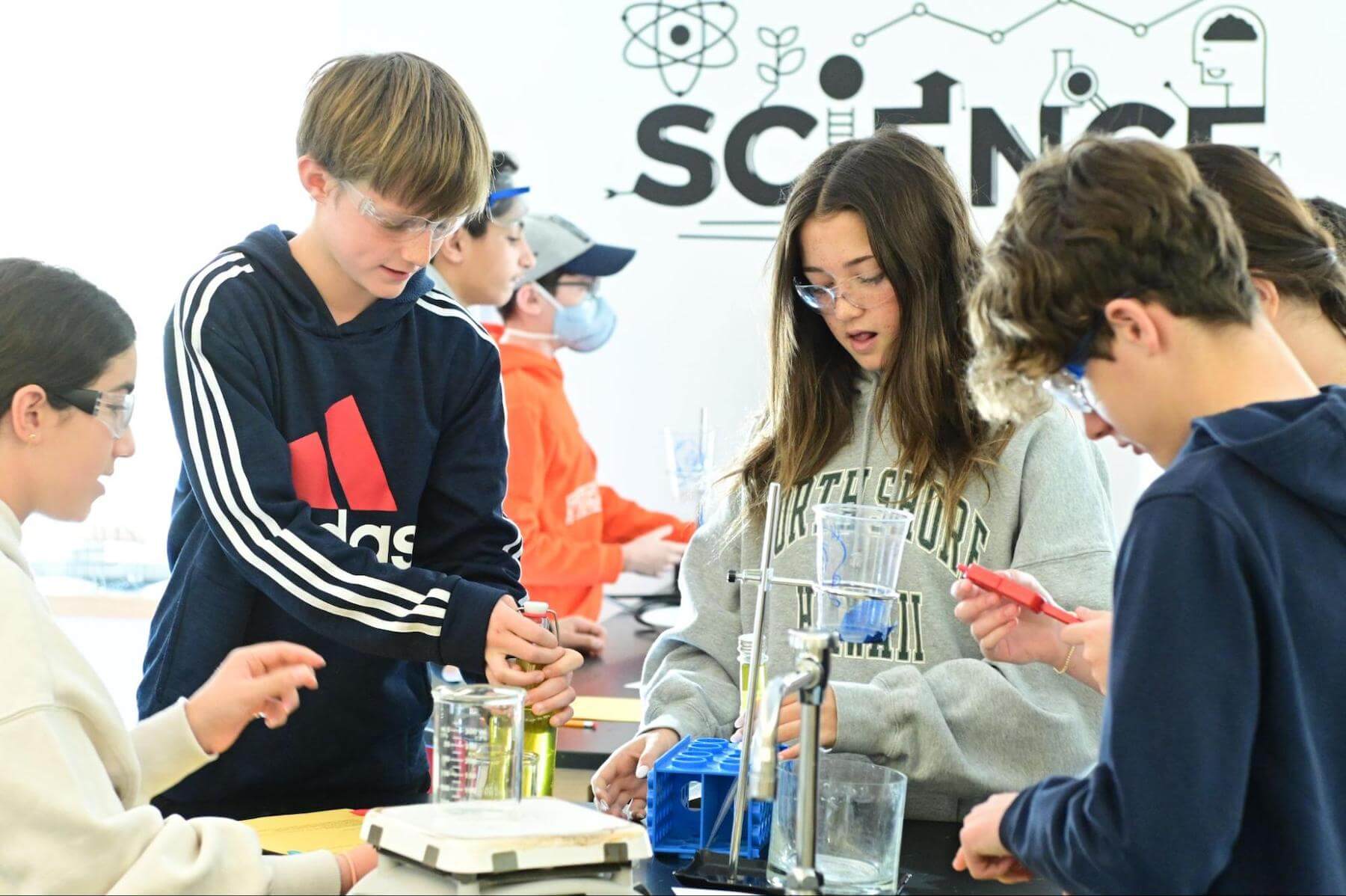
“On the test or in class, I’ll remember, “Oh yeah, the fun homeostasis lab we did,” George says. “Fun experiments let me memorize things better and help me in class; they’re just a fun way to have class overall.”