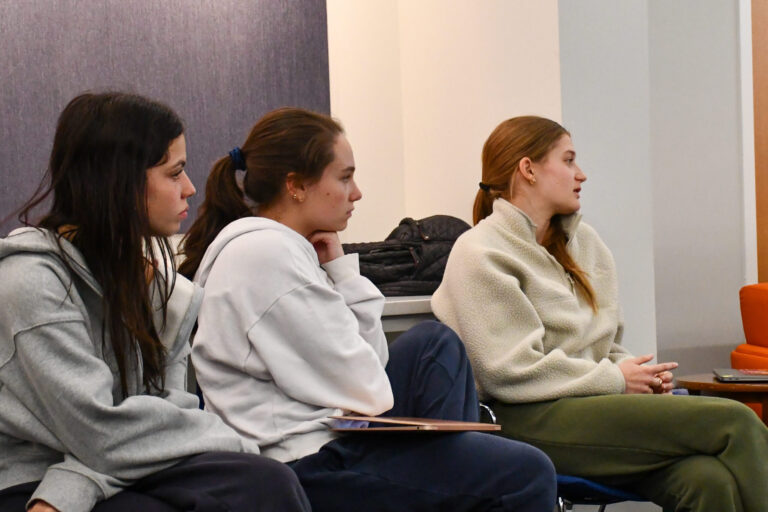
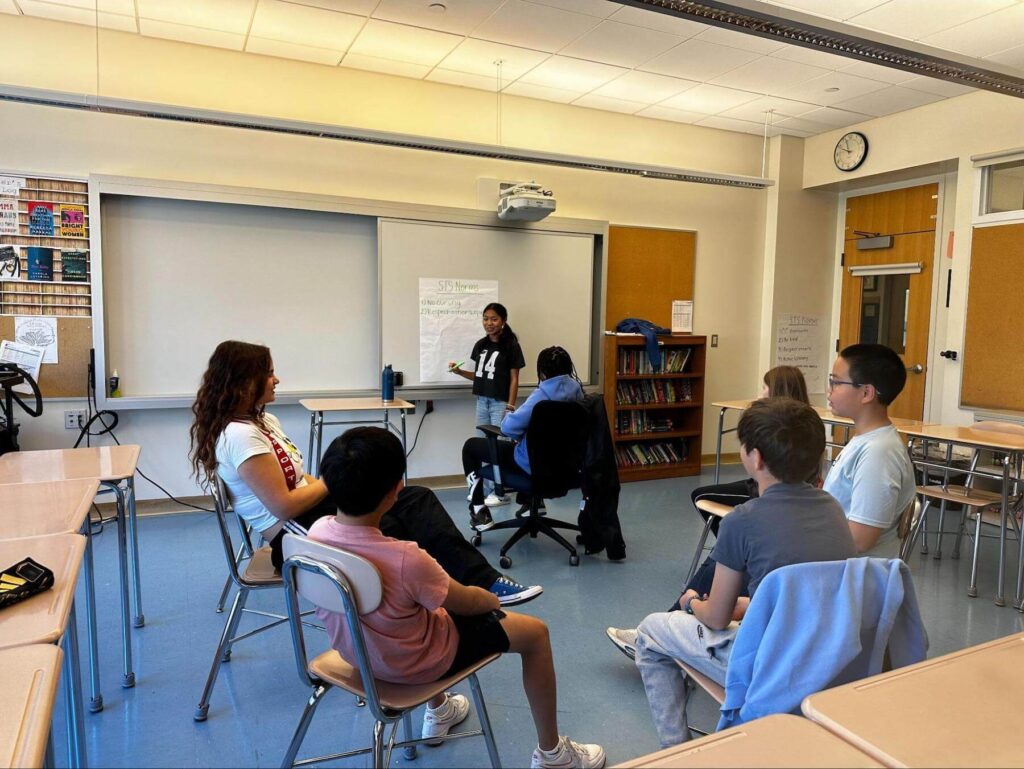
Peer connections are a vital experience of middle school and high school; however, rarely do students at these different developmental stages get to interact and build relationships with each other. At Ethical Culture Fieldston School, cross-divisional connections are normalized through the Ethics Department’s Student-to-Student Advanced Peer Leadership Program (STS), which trains Fieldston Upper students to serve as teachers and mentors for Fieldston Middle students. In this program, lessons focus on personal growth, community building, and ethical issues.
“Peer education is a powerful configuration because it functions as part of a circle of learning,” says Fieldston Middle Ethics Department Chair Abena Koomson-Davis about STS. “Middle school students engage with high school students who have successfully navigated the middle school experience and have demonstrated an awareness of and commitment to deepening their ethical practice.”
11th and 12th Graders interested in leading these lessons for middle schoolers apply to participate in an Advanced Peer Leadership class, where they learn to create and implement lessons for a middle school class. Aiming to help younger students examine themselves and their ethical and social-emotional learning, these student leaders facilitate discussions on topics such as self-awareness and expression, stress management and resilience, gender and social roles, activism and allyship, identity, relationships, value-based decision making, and more.
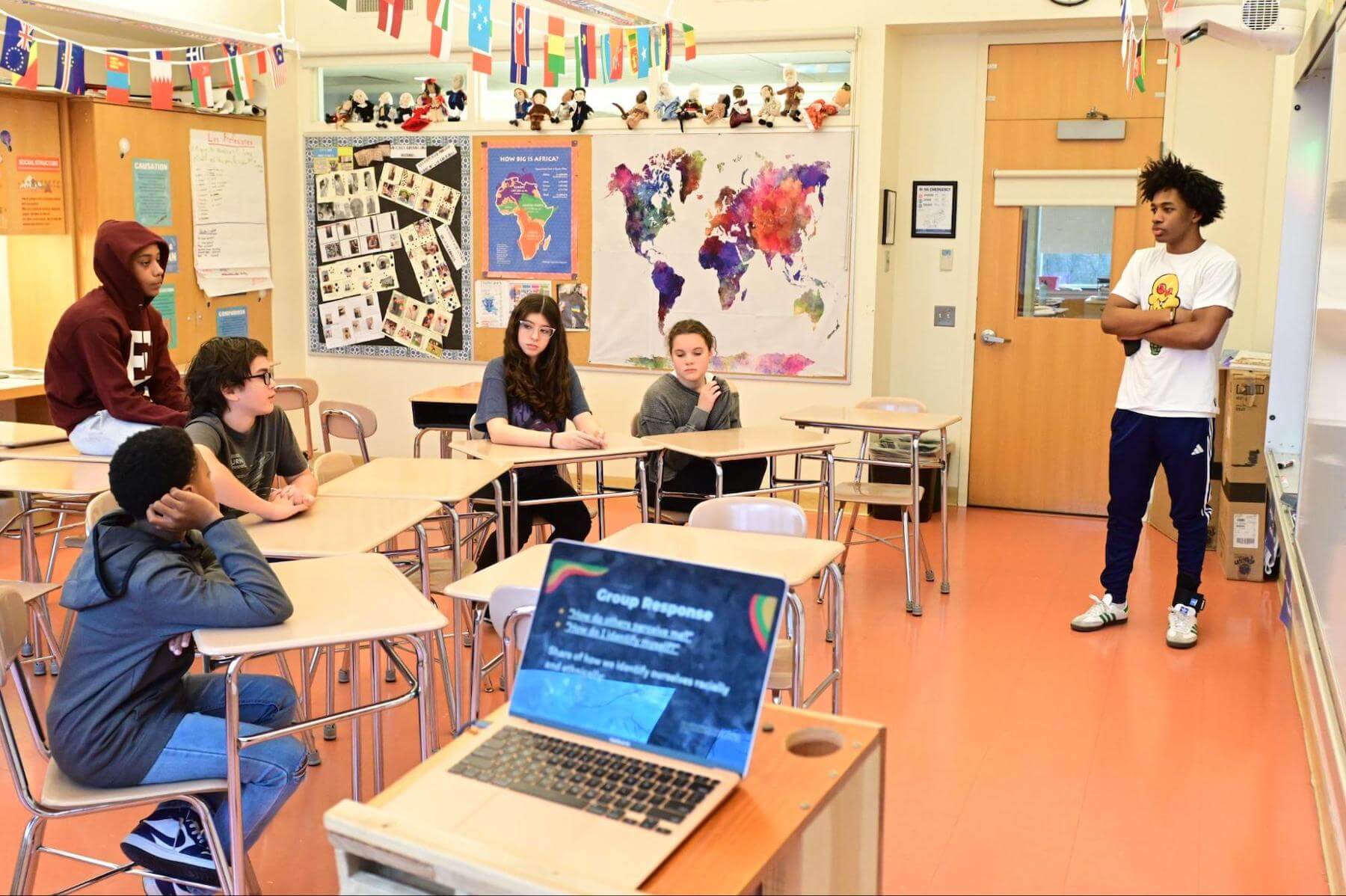
“They’ve demonstrated a strong desire to support younger people,” Koomson-Davis adds about the leaders. “As a result, middle school students experience the care, attention, instruction, and advice of mentors who are enthusiastic about ethical practice and building community here and wherever we go.”
STS leaders undergo a rigorous application process that considers faculty/staff recommendations of students with outstanding leadership potential. Drawing inspiration from their own middle school experience in STS class, Fieldston Upper students’ commitment stems from a desire to pay it forward to the next generation of students.
“The main reason I decided to be an STS leader is the impact the program had on me when I was in middle school,” says Maya O. ’25. “There’s a lot of transition in middle school that impacts people socially and mentally, and I think that having those people to look up to who have all of this knowledge, experience, and advice, is something great that’s very unique to Fieldston.”
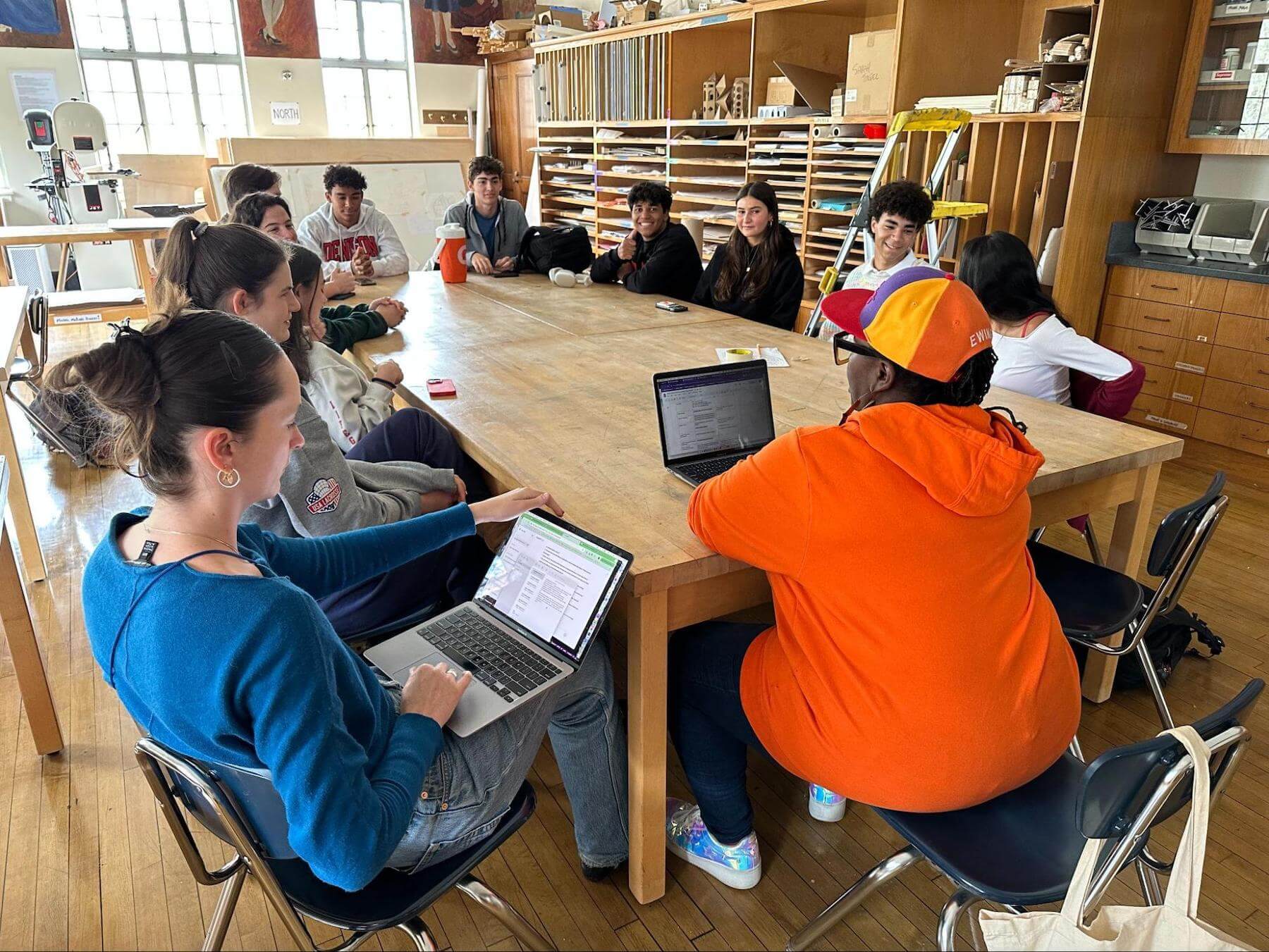
“There’s something instinctually rewarding about being an STS leader, especially being with kids for three months and really watching them develop,” Alexa C. ’25 says. “Because of how our lessons progress, the material does get more topically difficult. Watching students face those challenges and witnessing them become more comfortable with us and with themselves is really rewarding.”
The Fieldston Middle STS curriculum evolves each year, building upon previous grades’ themes. As an introduction to the program, 6th Graders learn about the elements of building a healthy community, while 7th Graders develop community themes of empathy and inclusivity with a particular focus on identity, equity, and belonging. 8th Grade students use an identity lens to discuss integrity, healthy choice-making, and wellness. Classes regularly engage in small and large group discussions, cooperative learning activities, journaling, affinity groups, student panels, and more.
“The focus of a typical STS class is on looking analytically at where our values and actions align and where they don’t,” Koomson-Davis says. “What is the impact of thoughts and deeds that fall outside of values we know are a part of healthy community building? How do we stay in tune with the things we say we believe? What does one do when one’s conscience has been activated? How do we create more equitable experiences?”
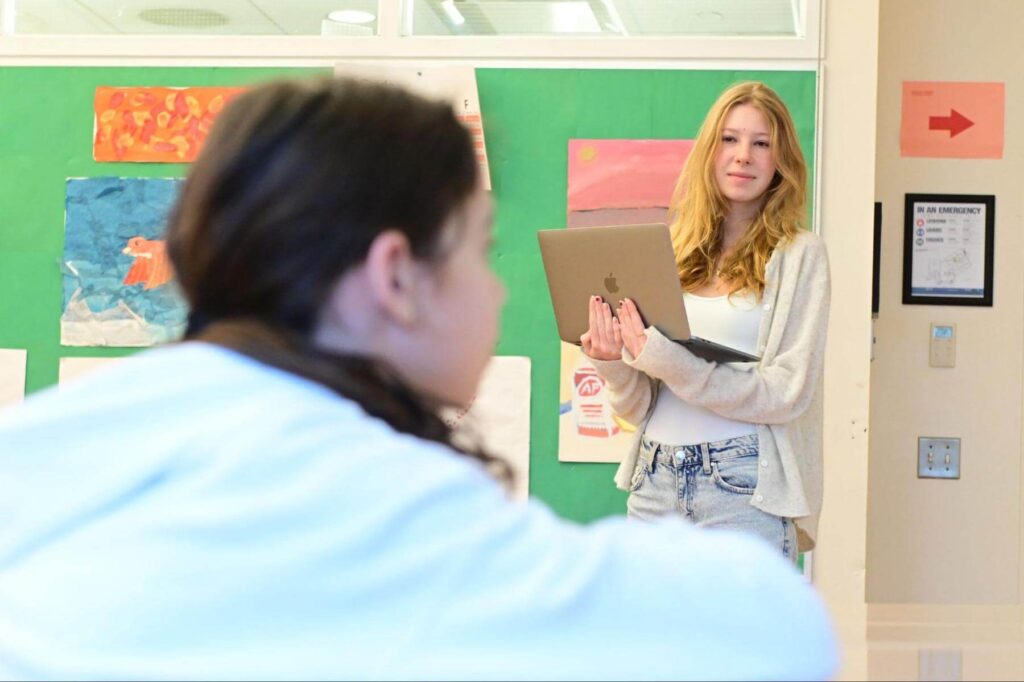
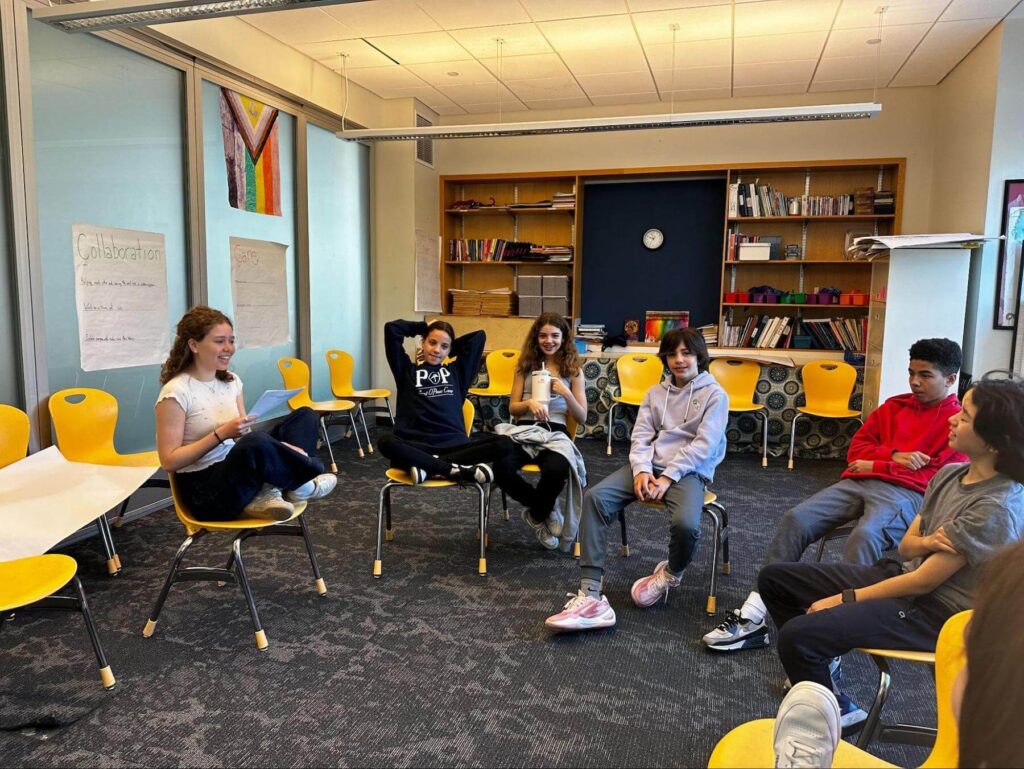
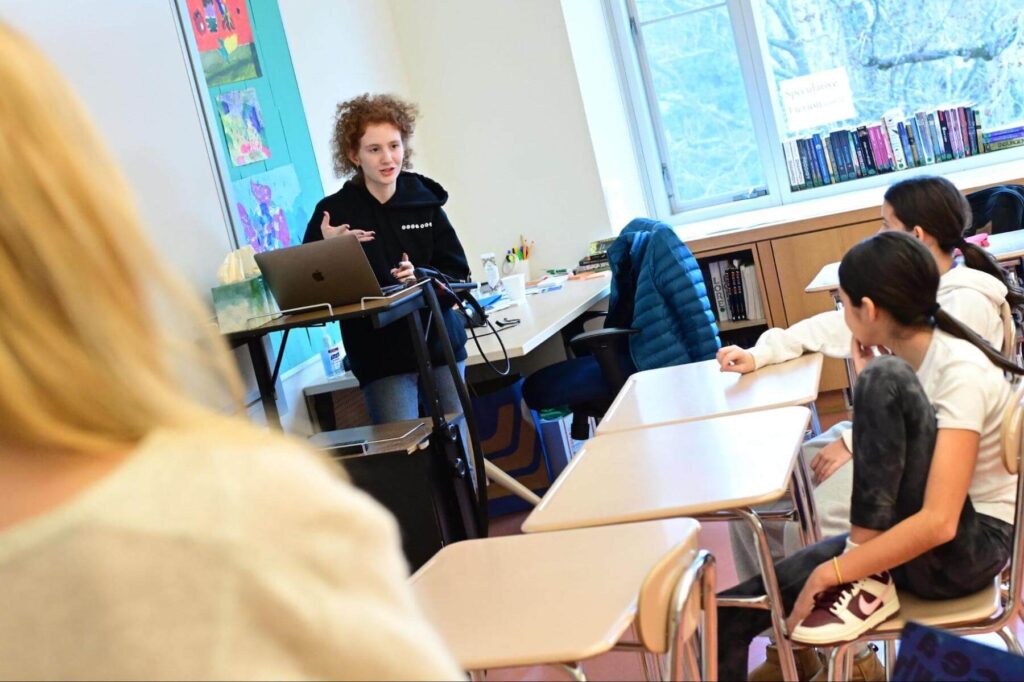
“When I first came to ECFS, the thing that I loved so much about it was the ethical classes and how ethical studies are incorporated into everything,” Remy L. ’24 shares. “It’s inspiring to see that students can also take away ethical messages from things that you wouldn’t think would have that kind of lesson.”
For Fieldston Middle students, this invaluable experience provides ethical guidance and community. Fieldston Upper students also benefit from the opportunity to develop their leadership skills and see how these mentorships impact other areas of their lives as well as their younger peers.
“I’ve always had trouble public speaking,” Arya G. ’24 says. “Having to speak in front of six 13-year-old kids has definitely helped a lot. Especially over the course of the quarter, you become much more comfortable with thinking and talking on the spot about whatever topic that they might bring up.”
“I was a quiet, reserved kid in middle school,” adds Liam L. ’24. “I certainly have taught some kids who remind me of myself. I try to focus on them and bring them to a place of confidence and a place where I see myself now: being confident in myself, confident in my answers, and confident in my school ability.”
“We view their experience as part of their ongoing ethical practice,” Koomson-Davis says about Fieldston Upper leaders. “The difference between the way they might practice in another class is that they see the impact of their decisions in the lives of the younger students that they work with. When they take that lens to understand their impact in other communities they participate in, it’s a tremendous benefit of this work.”