Lower Divisions
Nurturing joy, inquiry, and a love of learning
Ethical Culture in Manhattan and Fieldston Lower in The Bronx: Pre-K–5th Grade
Applying the Pillars of Our Mission
Academic Excellence
- Builds a strong foundation in literacy, mathematics, science, ethics, and social studies
- Enriches interdisciplinary learning through visual arts, music, world languages, physical education, and woodshop
- Balances challenge with joyful engagement, creativity, and individualized support to help each student grow with confidence
Progressive Education
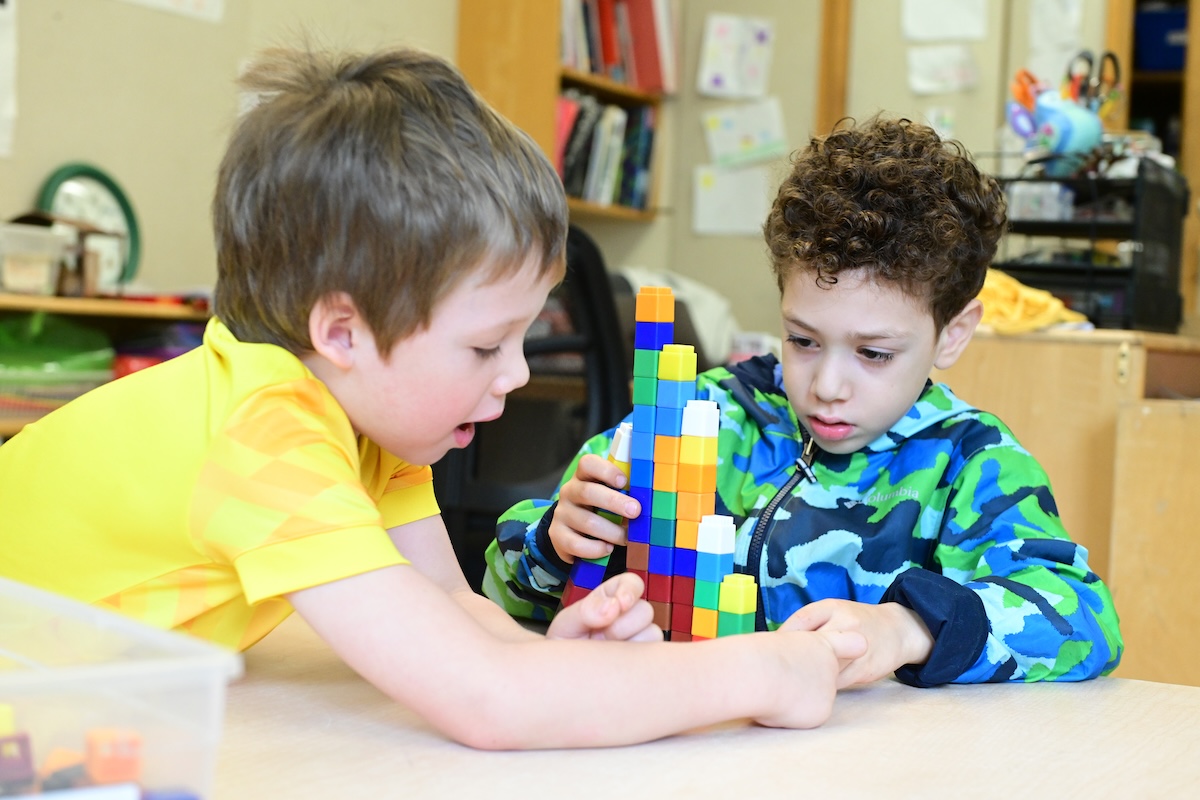
- Promotes hands-on, inquiry-driven, and student-centered learning
- Connects ideas across subjects through interdisciplinary and thematic projects
- Extends learning beyond the classroom through outdoor experiences and city-based exploration, leveraging all that New York City offers
Ethical Learning
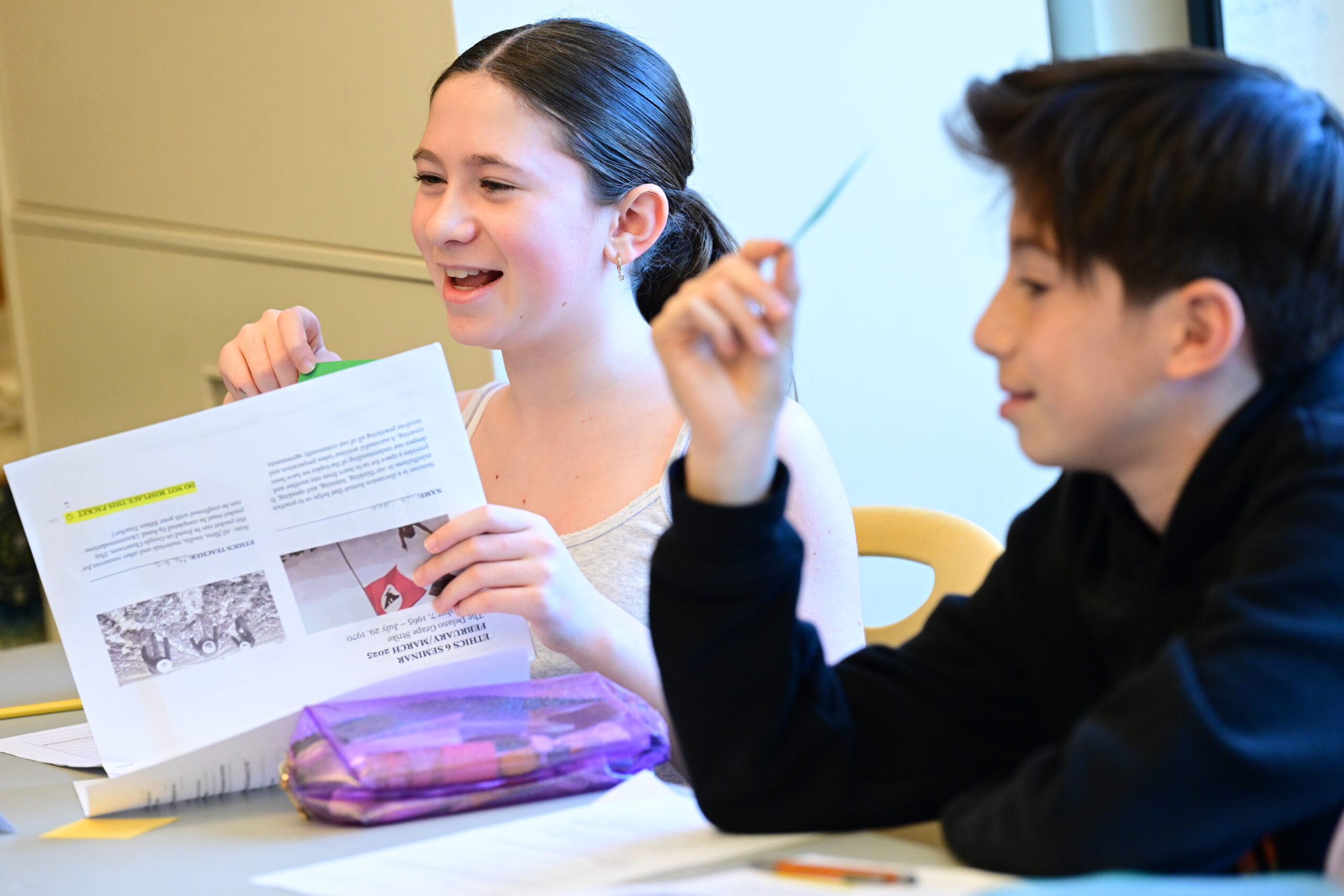
- Features ethics as a core subject, during which students explore empathy, social responsibility, and critical thinking at a developmentally appropriate level
- Integrates ethical principles into daily classroom routines and interactions
- Partners families and teachers to support each student’s growth as a thoughtful and caring community member
Curriculum
Ethics is not just a subject but a lens through which students explore their relationships, community, and the wider world. Beginning in Pre-K, students reflect on fairness and empathy. As they progress, they engage in deeper inquiry — for example, 5th Graders may write dystopian fiction to grapple with questions of equity, resources, and community through an ethical lens. This foundation cultivates critical thinking, moral agency, and informed citizenship.
Every aspect of Language Arts is rooted in cultivating a lifelong love for reading. Early learners build foundational literacy through meaningful introductory experiences in reading, writing, listening, and speaking. In Kindergarten, for example, students engage in reading aloud, creating signs/lists/notes, and phonemic awareness activities. These skills evolve into fluent reading, structured writing, and lively discussion as students explore a variety of texts and begin to revise and share their work. Older students are encouraged to expand these capacities into research, literary analysis, and persuasive writing, shaping them into confident storytellers.
Math is an active, hands-on adventure in thinking, reasoning, and discovery. Instruction is student-centered and responsive to each learner’s curiosity, helping every student see themselves as a mathematician in the making. Early learners use manipulatives and games to strengthen number sense and spatial understanding, while older students engage in leveled work that meets their needs and invites them to take on greater challenges. As skills develop, they apply mathematical thinking to real-world problems, collaborate with peers, and explore multiple strategies for finding solutions. Optional math clubs in the upper grades provide additional opportunities for enrichment, creativity, and advanced mathematical exploration.
SSW is a distinctive, interdisciplinary class where students weave together history, geography, ethics, literature, science, art, and even skills like cooking to understand how people, places, and systems connect. They begin by studying themselves and their immediate communities, learning how identity, cooperation, and fairness shape daily life, and then progress to more complex, inquiry-based curricula. One such project asks students to redesign the school garden into a community classroom, applying ideas of sustainability and accessibility. Through projects like these, SSW empowers students to see themselves as thoughtful participants in their communities and the wider world.
Science invites students to wonder, investigate, and explore the natural world as both thinkers and doers, using curiosity as a starting point for discovery. Early learners study plants, weather, and habitats through close observation, taking full advantage of the School’s access to outdoor learning spaces — from the Fieldston campus gardens to the open laboratories of Central Park. As they grow, students design experiments, collect and interpret data, and connect their findings to broader scientific systems and environmental issues. Innovation becomes a natural extension of this sort of experimentation. Students are introduced to the fundamentals of engineering and design and engage in ambitious, cross-disciplinary projects that teach them to question, think, and recognize themselves as innovators.
Music is central to student life, bringing energy, connection, and joy to the school community. From the earliest grades, students sing together at school assemblies, holiday gatherings, and community events — moments that celebrate school traditions and spirit. In the classroom, students explore rhythm, melody, and movement through playful activities that strengthen listening and coordination skills. Our students have the opportunity to learn how to read music, play instruments, and perform in ensembles, discovering the importance of collaboration. Older students compose, improvise, and connect music to storytelling when they perform in school plays and write songs for assemblies.
Both Ethical Culture and Fieldston Lower have expansive libraries and dedicated library teams. Collectively, the libraries host a wealth of resources, including e-books, audiobooks, picture books, periodicals, visual media, databases and reference materials, and fiction and nonfiction for all ages. The Library program helps students grow as readers and researchers as they learn how to locate information, evaluate sources, and connect their reading to classroom studies. Families are encouraged to visit the library throughout the week before and after school to select books to take home and the library provides vast resources for students to stay connected to their reading practices over the summer.
All lower school students participate in P.E. in addition to regular recess and outdoor time. P.E. builds confidence, cooperation, and a sense of well-being through movement and play. Younger students develop coordination, balance, and teamwork through creative games and outdoor exploration. As they mature, they refine specific motor skills, learn strategy, and understand the importance of fair play and perseverance. Older students are encouraged to set personal goals, demonstrate leadership in group activities, and reflect on how movement supports lifelong health and resilience.
All students begin learning Spanish in Pre-K, laying the foundation for additional language study — such as Latin, French, and Mandarin — when they reach middle school. Spanish classes illuminate the joy of cultural connection, beginning with songs, stories, and games that build listening and speaking skills. As students grow, they expand their vocabulary, read short texts, and express themselves in both spoken and written Spanish. Over time, instruction becomes increasingly immersive, encouraging students to use the language naturally in conversation and classroom activities. Additionally, they explore traditions and histories from across the Spanish-speaking world, cultivating curiosity, empathy, and confidence as global communicators.
Art and Woodshop together form a vibrant space for creativity, problem-solving, and self-expression. Students explore a wide range of materials — from paint and clay to wood and fabric — learning how to bring their ideas to life through design and craftsmanship. As they develop technique and control, students begin to plan, revise, and use tools safely and thoughtfully to construct both functional and expressive pieces. Older students take on more complex, interdisciplinary work that blends visual art, design, and engineering, such as building furniture, collaborative installations, or community-focused projects. Across all levels, Art and Woodshop nurture imagination and the satisfaction of creating something uniquely their own.
Technology empowers students to be inventive thinkers and responsible digital citizens in a rapidly evolving world. Early learners explore patterns, sequencing, and cause and effect through coding toys and interactive programs that spark curiosity and logic. They design digital projects, collaborate on creative challenges, and learn about digital safety, privacy, and respectful online behavior. Older students engage with programming, multimedia design, and emerging technologies such as artificial intelligence — examining both their potential and their ethical implications. Students consider how innovation can serve communities, address real-world problems, and influence society, learning not only how to use technology skillfully but also how to approach it with empathy, integrity, and purpose.
The After School Program extends the school day, allowing students to choose from a wide range of activities, including chess, cooking, music, dance, theatre, sports, robotics, and so much more, all designed to complement and enhance the daytime curriculum. The program also encourages intellectual growth, social interaction, and teamwork, giving students a chance to explore new interests, develop skills, and build friendships in a safe and engaging setting.